

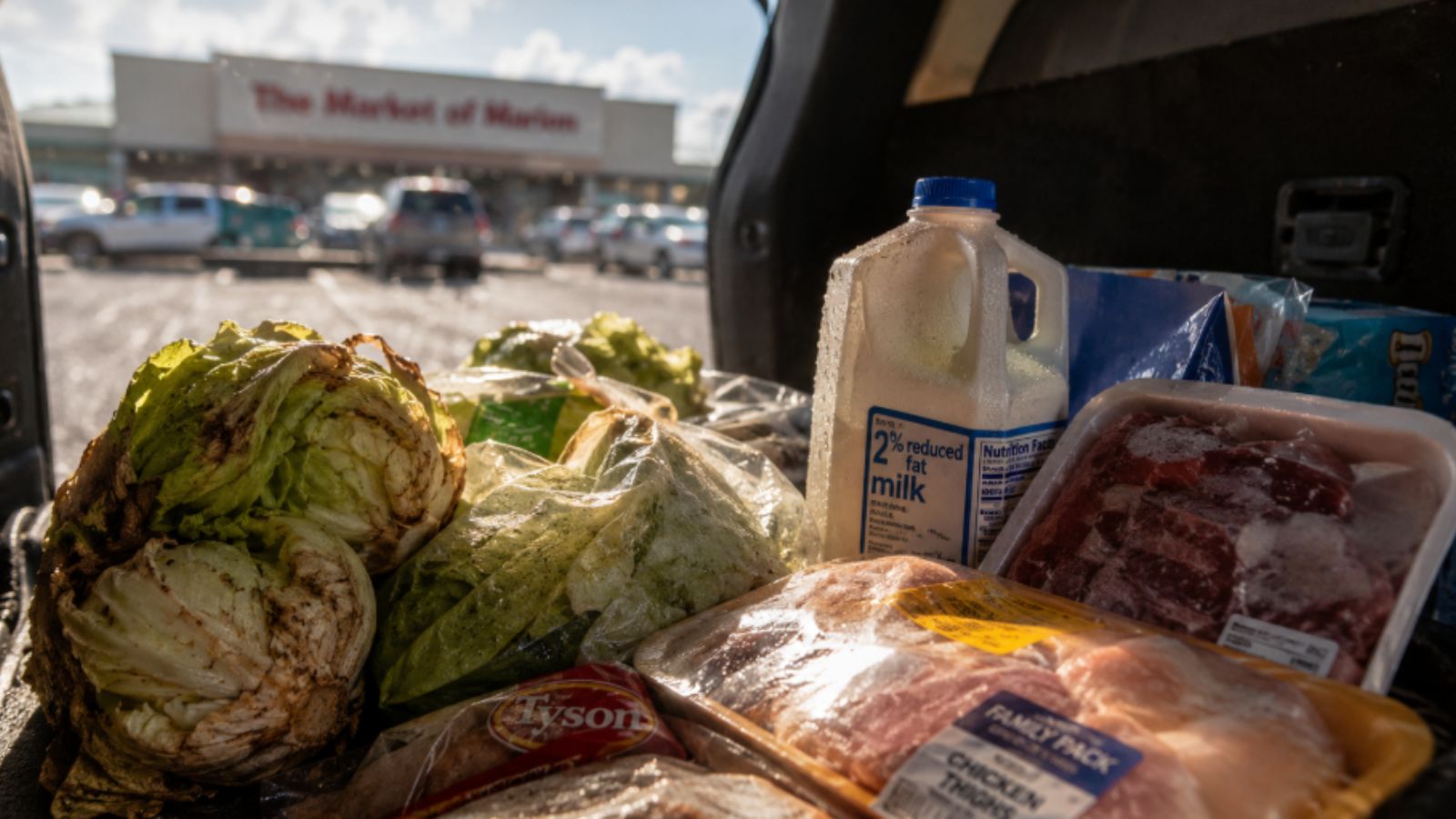
Running groceries from the Market of Marion back to Silver Springs Shores in May’s 90-degree heat demands an efficient vehicle AC system. Weak evaporators fail to clear localized humidity, causing rapid food spoilage in cargo areas. Gregg Smith Automotive restores peak performance to safeguard your cold-chain investments.
A weekend trip to the Market of Marion is a staple for local families looking for fresh produce, quality meats, and local goods. But during a typical 90°F May afternoon in Marion County, the clock starts ticking the second you push your shopping cart out to the gravel parking lot. If your vehicle’s air conditioning isn’t performing at its peak, the drive back to Silver Springs Shores transforms from a routine errand into a fast-paced race against food spoilage.
The Cold Chain Crisis and the Thermodynamics of a Hot Trunk
When your car sits unshaded in a wide-open parking lot, it experiences what we call an intense thermal soak. Within thirty minutes, interior cabin temperatures can easily soar to 130°F, turning your rear cargo area or trunk into a literal oven. This creates an immediate breakdown of the “cold chain”—the uninterrupted temperature control needed to keep perishable food safe.
Placing cold items into a blazing vehicle creates an aggressive thermal transfer. The ambient heat does not just warm the air inside your car; it forces its way directly into your milk, meat, and fresh produce. To stop this transfer, your air conditioning system must achieve an immediate and powerful “pull-down” speed, shifting the cabin air out of the biological danger zone before you even clear the market’s exit.
Evaporator Delta T and Low Refrigerant’s Effect on Your Produce
The heart of your car’s ability to pull heat out of the air is the Evaporator Core hidden deep inside your dashboard. To protect your cargo, the evaporator requires precise pressure and exact refrigerant levels to maintain proper thermodynamic balance:
- The Delta-T Rule: A healthy automotive AC system should achieve a 20°F to 30°F temperature drop (Delta-T) between the air entering the cabin intake and the air exiting the center vents.
- The Core Target: To deliver true, crisp 40°F air at the dashboard, the surface of the evaporator core itself must stay just above freezing.
- The Low-Charge Failure: When your system is even 10% undercharged, the pressure drops incorrectly, causing the Thermal Expansion Valve (TXV) to under-feed the core. The evaporator surface temperature rises to 55°F or 60°F, rendering it incapable of cooling the back of the vehicle.
Understanding the Food Safety Thresholds
To illustrate how a malfunctioning AC system directly impacts your household budget, consider the stark difference between what your groceries need and what an underperforming system actually delivers during a drive down CR-464.
The table below breaks down the relationship between your vehicle’s mechanical health and your food’s safety window:
Vehicle AC Health vs. Food Preservation Stability
| AC System Status | Core Vent Temp | Cargo Area Climate | Perishable Safety Window |
| Peak Performance | 38°F – 42°F | Uniformly Cool (~68°F) | Safe: Full protection for long cross-town drives. |
| Mild Refrigerant Leak | 50°F – 55°F | Humid & Warm (~82°F) | Marginal: Spoilage begins within 15–20 minutes. |
| Restricted TXV / Dead Fan | 60°F+ | Greenhouse Trap (95°F+) | Critical: Rapid bacterial growth; dairy and meats soften instantly. |
Managing Latent Heat and the Cargo Area Greenhouse Effect
Most sport utility vehicles and hatchbacks suffer from a major design challenge: the rear cargo area behaves like an isolated greenhouse. The massive rear glass traps radiant heat, while the vehicle’s dash vents struggle to push cool air all the way to the back.
When you load up multiple bags of cold or damp items, you introduce a massive latent heat load into the cabin. Latent heat is the thermal energy contained within moisture. As cold grocery bags sweat, they release humidity into the vehicle.
An undercharged AC system or one with failing Blend Door Actuators cannot dehumidify this specialized micro-climate. The cabin remains heavy, thick, and muggy. Instead of pulling the moisture out through the evaporator drain line, the system allows the humid air to sit in the back, driving heat straight into your frozen goods and turning crisp local lettuce into wilted, warm waste before you can turn onto your home street in the Shores.
The Master Tech Verdict on Keeping Your Cargo in the Safe Zone
At Gregg Smith Automotive, we do not believe in the “budget top-off” approach that only keeps We avoid simple “budget top-offs” that only cool the driver. Your vehicle’s AC must be mechanically sound to protect heavy cargo during Florida’s intense summers.
At our Abshier Blvd shop, we provide a complete system evaluation:
- A Digital Thermistor Probe measures precise ductwork air output.
- An Infrared Thermal Imager ensures airflow (CFM) reaches every corner of your cargo area.
- Filter and blend door inspections confirm your system can effectively remove latent humidity.
Prevent your groceries from spoiling. Visit us to verify your evaporator efficiency and safeguard your haul.
Protect Your Haul Before the Next Market Run
Don’t risk turning a hundred-dollar grocery trip into a trunk full of spoiled food. At Gregg Smith Automotive, we don’t guess—we measure. Our master techs will benchmark your system’s pull-down speed, verify your evaporator’s temperature drop, and ensure your cargo area stays out of the danger zone all summer long.
Stop by the bay or call today to secure your AC system check.
Gregg Smith Automotive 6202 SE Abshier Blvd, Belleview, FL 34420
Frequently Asked Questions
Why does my car feel cool in the front seat, but my groceries in the back are completely warm?
This is a classic airflow and layout issue. Cargo areas in SUVs and hatchbacks trap radiant heat through the rear windows. If your system has low vent velocity (CFM) or a failing blend door actuator, the cool air never makes it to the back, leaving your groceries sitting in an isolated heat pocket.
How does a low refrigerant charge cause the air to feel humid?
The AC system’s job is to remove moisture from the air by condensing it on a freezing-cold evaporator core. If your system is low on refrigerant, the core temperature stays too warm to condense the humidity, leaving the cabin air thick, muggy, and unable to properly preserve cold items.
What is the difference between sensible heat and latent heat in my vehicle?
Sensible heat is the actual temperature you can read on a thermometer. Latent heat is the thermal energy trapped in moisture. When you load sweating, cold grocery bags into a hot car, you spike the latent heat, requiring a highly efficient evaporator core to strip the humidity out of the air.
Can a dirty cabin air filter cause my groceries to spoil faster?
Absolutely. A clogged cabin filter severely restricts the cubic feet per minute (CFM) of air leaving your vents. Without strong airflow, the cool air cannot overcome the massive volume of hot air sitting in your rear cargo space, allowing the temperature in the back to skyrocket.
Is it safe to just use a can of store-bought refrigerant to fix my AC before a grocery run?
No, because those DIY cans do not measure the exact weight of the refrigerant or check for hidden system restrictions. Overcharging a system with a store can can actually raise your evaporator core temperatures, making your AC blow warmer and putting your compressor at risk of total mechanical failure.