

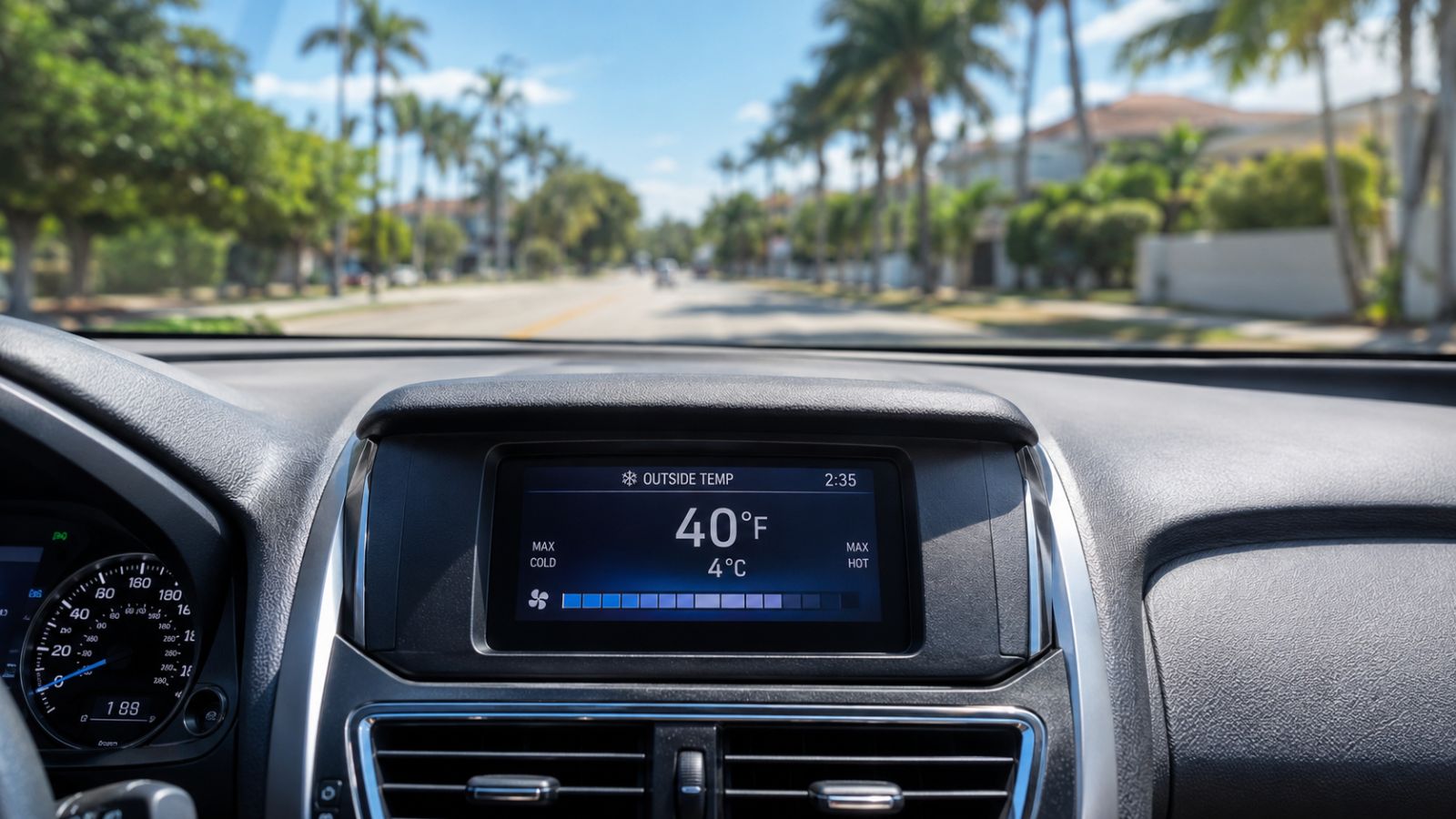
Listing a private vehicle in The Villages during July’s peak heat demands concrete mechanical transparency. A verified automotive AC health report serves as an essential trust signal, validating your asset’s premium blue-book valuation. Gregg Smith Automotive provides comprehensive climate certifications to eliminate buyer negotiation friction and defend your asking price.
Selling a vehicle in The Villages during peak summer heat requires mechanical transparency, as buyers prioritize climate control performance due to Florida’s harsh climate. By obtaining a verified automotive AC health report from Gregg Smith Automotive, private sellers can validate their asset’s value, eliminate negotiation friction, and protect their asking price against skeptical buyers.
The High Cost of Lukewarm Air in the Summer Used Car Market
In Florida’s peak summer market, an underperforming AC system is a deal-breaker. Prospective buyers typically walk away from vehicles with lukewarm air or instantly slash $1,500 to $2,500 off the price to cover repair risks.
Private sellers should avoid listing vehicles as “just needing a cheap Freon recharge”. Experienced Marion County buyers recognize this as code for a hidden structural leak; if it were a simple fix, the seller would have already addressed it. Failing to provide technical proof of system health gives buyers full leverage during negotiations.
The Anatomy of a Verified Shop Climate Performance Certification
To completely eliminate buyer skepticism and defend a premium private-sale asking price, you need to provide an authenticated, printed verification profile. When we execute an advanced AC Health Report in our Abshier Blvd bay, we perform a deep forensic evaluation of the entire thermal loop, logging physical values that prove long-term mechanical stability:
- Manifold Pressure Balances: We utilize precision Digital Manifold Gauges to log exact static and operational pressure lines, proving that the internal reed valves and seals of your Scrolling Compressor are functioning at factory specifications.
- Halogen Structural Testing: We sweep an ultra-sensitive Electronic Halogen Leak Detector along all aluminum line unions, flexible rubber junctions, and the service ports to confirm there are zero microscopic pathways allowing refrigerant to bleed away into the atmosphere.
- Component Delta-T Verification: We track the cooling efficiency of the Thermal Expansion Valve (TXV) and the inner Evaporator Core Unit to guarantee the loop strips latent humidity from the air efficiently without freezing up under sustained engine loads.
Eliminating Negotiation Friction for Sellers in The Villages
Providing a certified shop report completely shifts the dynamic of a private vehicle transaction. It moves the conversation away from verbal promises and grounds the sale in objective, verified service statistics.
The data profile below contrasts the market reality of an unverified vehicle listing against an asset backed by an authentic Gregg Smith Automotive climate document:
Private Transaction Market Comparison Profile
| Market Evaluation Marker | Unverified Private Listing | Certified AC Health Report Profile |
| Buyer Trust Index | Critical skepticism; assumes hidden system leaks. | High confidence; mechanical health is fully documented. |
| Asking Price Defense | Forced to accept heavy blue-book deductions. | Successfully defends a premium, top-tier private value. |
| Test Drive Performance | Volatile vent temperatures during idling periods. | Confirmed sub-42°F air delivery in under five minutes. |
| Advanced System Safety | High risk of hidden voltage sags from old blowers. | Electronic logs confirm stable voltage to ADAS safety modules. |
Using Technical Vent Diagnostics to Justify a Premium Price
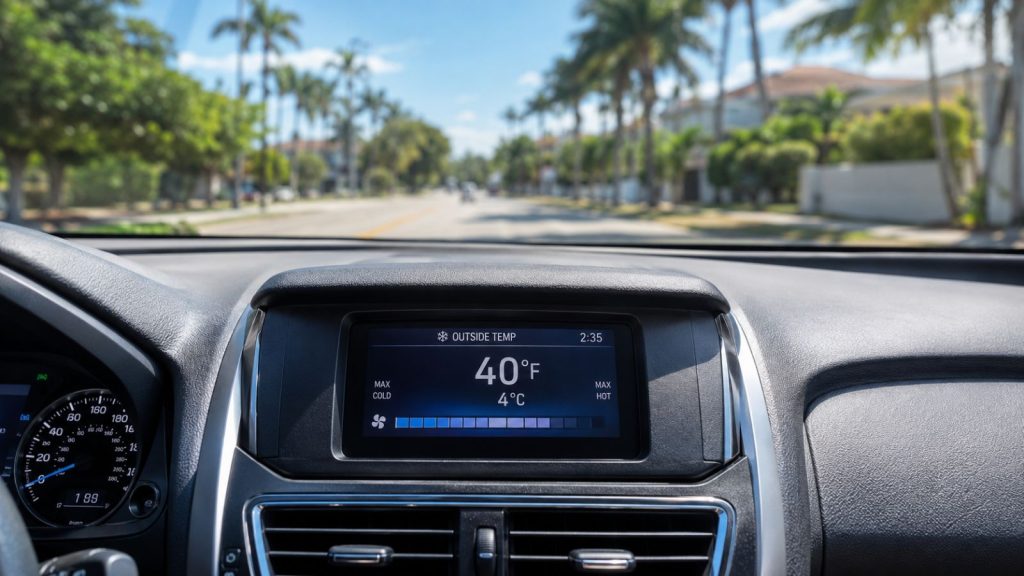
Astute buyers evaluate climate performance beyond a simple touch, often monitoring dash displays during idling periods.
Our certification includes using a Digital Vent Thermometer in the center duct while maintaining 2,000 RPMs to simulate local driving. This process verifies the system reaches a crisp 40°F (4°C) within minutes.
We also inspect Condenser Fan Assemblies to ensure proper electrical draw and fin integrity. Certifying fan clutches and straightening fins proves the vehicle can handle Abshier Blvd traffic without overheating, preventing the system from warming up while stationary.
The Master Tech Blueprint for an Authenticated Private Sale
Obtaining a pre-sale climate certification is a strategic move for sellers in The Villages. It demonstrates a disciplined approach to overall vehicle maintenance, signaling that critical systems like the engine and transmission have been equally well-maintained.
Providing a technical diagnostic sheet from Gregg Smith Automotive establishes immediate buyer trust. Rather than asking buyers to risk the Florida heat, you offer empirical proof that the cooling system is optimized and road-ready. This documentation protects your equity, eliminates pricing disputes, and secures your financial return.
Protect Your Equity and Lock In Your Private Sale Value
Don’t let aggressive buyer negotiations strip away the true value of your vehicle. Our master technicians at Gregg Smith Automotive possess the digital manifold gauges, electronic leak sniffers, and precision diagnostics required to supply you with an unassailable, premium climate health report.
Secure your financial return and book your pre-sale certification today.
Gregg Smith Automotive. 6202 SE Abshier Blvd, Belleview, FL 34420
Frequently Asked Questions
Why does a verified AC health report carry so much weight in the Florida used car market?
In our severe climate, an automotive air conditioning system is considered a primary mechanical system, equivalent in value to the engine or transmission. Because replacing a seized compressor and clearing out contaminated lines can easily cost thousands of dollars, buyers use the verified health of the AC loop to judge the overall mechanical validity of the entire vehicle.
What is the difference between an electronic leak test and a basic visual inspection?
A basic visual inspection can only spot prominent, oily stains left behind by massive fluid leaks. An electronic test uses an advanced halogen leak detector capable of sniffing out microscopic gas escape paths down to a fraction of an ounce per year, locating a hidden leak deep within the dashboard’s evaporator housing long before it causes a complete system failure.
Can a dirty cabin air filter actually lower my vehicle’s private-sale value?
Yes. A heavily restricted cabin filter severely chokes off total vent airflow volume (CFM). During a test drive, a potential buyer will notice the weak air volume and immediately assume that the blower motor is failing or that the evaporator core is structurally blocked, prompting them to demand a heavy discount on your asking price.
How does an overworked AC blower motor affect a vehicle’s advanced driver safety electronics?
When an AC system suffers from internal restrictions or a failing blower fan, the electrical components draw a high amount of amperage from the alternator to maintain speed. This heavy electrical draw can cause subtle voltage sags inside the vehicle’s electrical loop, occasionally triggering unexpected error codes or temporary dropouts within sensitive ADAS safety sensors.
Should I get an AC health report even if my car is only a few years old?
Yes, especially if you are trying to command a premium, top-of-the-market asking price. Modern air conditioning systems utilize lightweight aluminum components and specialized thin-walled lines designed to shed weight, meaning even late-model vehicles can develop micro-vibration leaks or expansion valve restrictions that a smart buyer will look for.