

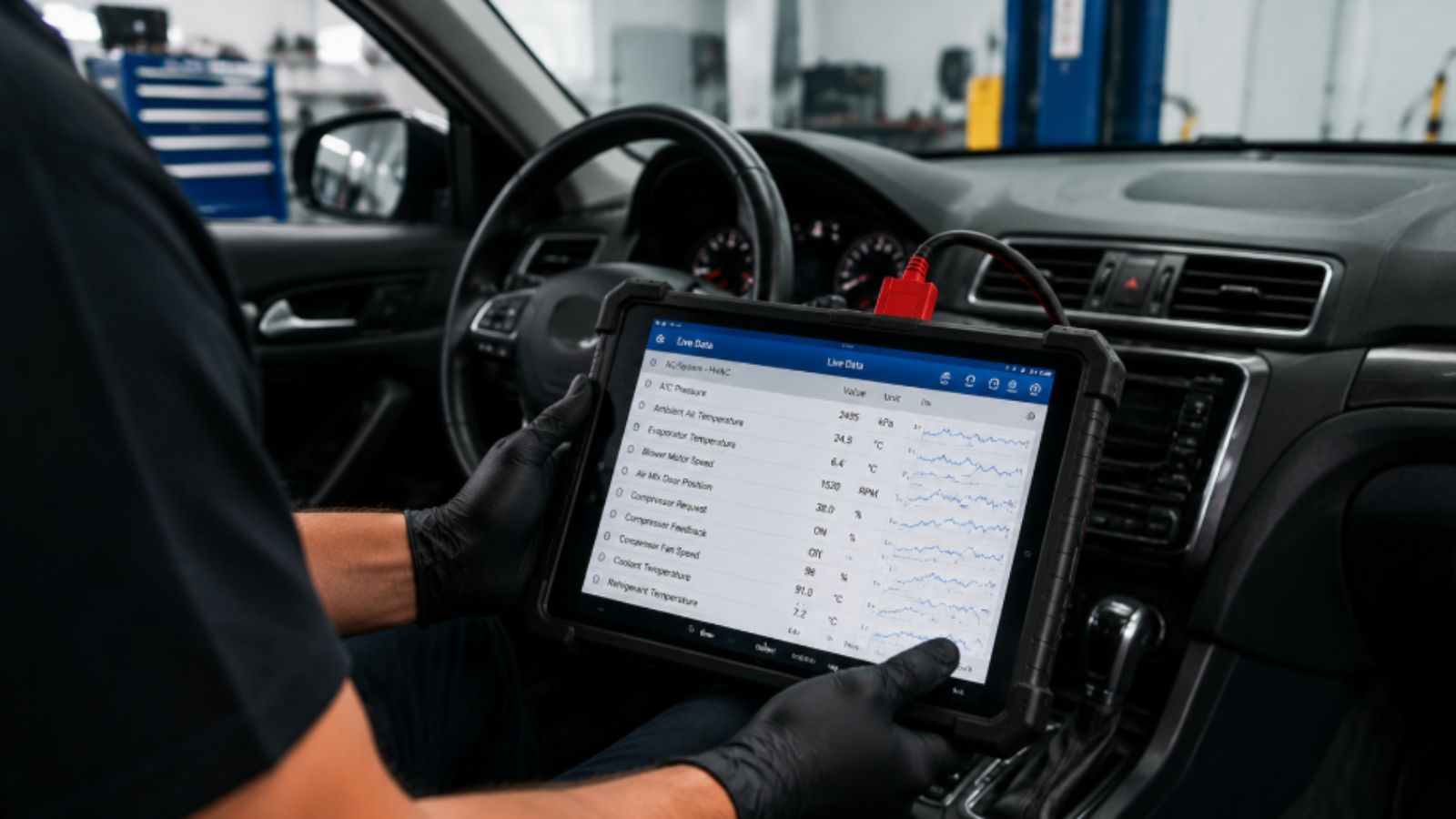
Modern vehicle telematics platforms utilize predictive cloud diagnostics to identify a five percent climate control efficiency drop before cabin temperatures fluctuate. By tracking active pressure transducer data and compressor current draws along the US-441 route, Gregg Smith Automotive isolates hidden mechanical anomalies before they transform into costly road failures.
Traditional automotive maintenance is reactive, waiting for mechanical breakdowns or obvious failures before seeking repairs, often turning minor issues into costly overhauls. Modern vehicle telematics have changed this by monitoring structural health in the background. These systems detect microscopic performance drops, enabling drivers to proactively address climate control issues before they result in expensive road failures.
The Hidden Data Streams Tracking Your Climate Control System Integrity
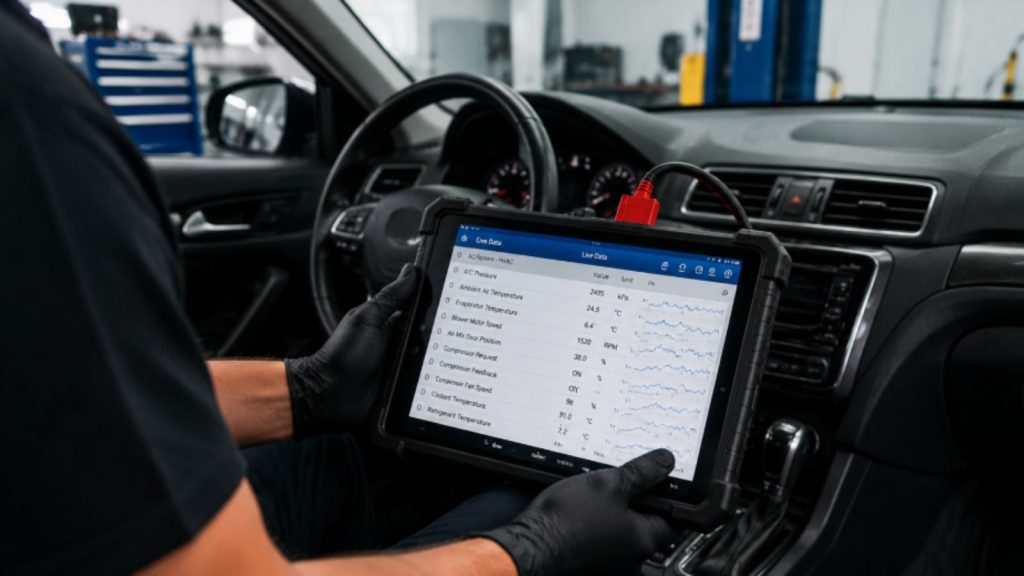
Modern vehicle AC systems are digital ecosystems managed by control modules that generate high-speed Parameter IDs (PIDs). Our technicians use advanced scan tools via a Bidirectional OEM Data Link Connector to monitor these live data streams. This real-time access allows us to identify performance issues by tracking operational metrics rather than waiting for basic trouble codes.
- Transducer Voltage Gradients: Monitoring the High-Side Pressure Transducers as they convert line pressure into a fluid 0.5 to 4.5-volt signal.
- Thermal Discharge Curves: Evaluating the Evaporator Core Temperature Thermistors to track exactly how fast the core sheds heat after the compressor cycles on.
- Component Amperage Allocation: Measuring the precise electrical current drawn by brushless cooling fan modules and electronic variable-displacement control valves under load.
Predicting Failure on How Algorithms Detect Subtle Efficiency Drops
Predictive algorithms detect early system decay by monitoring energy input versus cooling output. Even when vents blow cold air, telemetry identifies strain—such as overworking compressor valves—signaling potential failure weeks before cabin temperatures rise, allowing for proactive intervention.
Driving the US-441 corridor exacerbates these stresses, as traffic and heat strain systems. By tracking minor efficiency drops, telematics systems enable technicians to resolve hidden issues like sensor drift or leaks before they escalate into catastrophic roadside breakdowns.
Preventing Road Failures Along the Demanding Stop and Go US 441 Corridor
Commuting the US-441 corridor in summer creates extreme thermal stress on vehicle air conditioning. Stagnant traffic, intense pavement heat, and reduced airflow force systems to work harder, exposing hidden vulnerabilities like micro-leaks or failing clutches. Without intervention, this over-stressing can lead to abrupt system shutdowns, potentially leaving you stranded on the roadside.
Predictive telematics eliminate this risk by identifying minor efficiency drops before they escalate into failures. When your vehicle transmits early warnings, technicians can use streaming data to pinpoint and resolve specific issues—such as sensor drift or minor leaks—while the car is still fully drivable, ensuring your climate control remains reliable and preventing expensive roadside emergencies.
Baseline Telematics Matrix on Optimal vs. Predictive Failure States
To confidently catch a system anomaly before it turns into an active mechanical failure, our service advisors compare active streaming data blocks against verified factory telemetry standards.
The data profile below demonstrates how a 5% efficiency drop shows up clearly within your vehicle’s internal data paths long before your dashboard vents start blowing warm air:
Automotive Climate Control Telematics Parameter Mapping
| Telematics System Variable | Optimal Factory Baseline Stream | Active 5% Efficiency Failure Alert |
| High-Side Transducer Voltage | Consistent; tracking evenly at 2.1 Volts | Erratic voltage drift floating at 1.7 Volts |
| Compressor Valve Duty Cycle | Efficient modulation staying within 60% | Forced maximum compensation locked at 95% |
| Evaporator Thermistor Decay | Drops cleanly to 38°F inside 45 seconds | Sluggish thermal curve taking over 120 seconds |
| Cooling Fan Amperage Draw | Balanced electrical consumption at 12 Amps | Elevated draw spiking to 22 Amps under load |
| Human Passenger Sensation | Cabin feels perfectly cold and comfortable | Cabin feels perfectly cold and comfortable |
Evolving From Reactive Warning Lights to Real-Time Telematics
The automotive industry is evolving from reactive dashboard warnings to proactive telematics. These cloud-connected networks use real-time data and cellular connectivity to detect early component decay, enabling repairs before hard mechanical failures occur.
- Predictive Analysis: Tracks minute voltage drops or rising module temperatures before components fail.
- Self-Monitoring Lab: Transforms your vehicle into an autonomous diagnostic platform, linking driver and technician.
- Proactive Summaries: Transmits automated, data-driven health reports directly to your shop before a breakdown occurs.
- Precision Targeting: Allows Gregg Smith Automotive to pinpoint and repair losing components before warning lights flash.
The Digital Master Tech Verdict on Cloud Connected Automotive Maintenance
Embracing predictive telematics data requires moving past the old-fashioned philosophy of waiting for a component to break before fixing it. In the modern era of complex, multiplexed vehicle networks, data is your most powerful tool to save time, protect your service budget, and ensure long-term road safety.
Gregg Smith Automotive uses advanced digital infrastructure and bidirectional data to analyze live waveforms and sensor parameters. Instead of guessing, we resolve component degradation by interpreting your car’s digital language, keeping it reliable and optimized for summer heat.
Synchronize Your Vehicle Data with Precision Technical Care
Don’t wait for a stressful roadside breakdown to address hidden climate control failures. Our certified master technicians at Gregg Smith Automotive have the factory-level data synchronization tools, bidirectional scanners, and cloud-diagnostic training required to read your vehicle’s telematics and correct system vulnerabilities cleanly and accurately.
Take command of your preventative maintenance and book your advanced data audit today.
Gregg Smith Automotive 6202 SE Abshier Blvd, Belleview, FL 34420
Frequently Asked Questions
Why does my connected car app show an AC efficiency alert when my vents are still blowing perfectly cold air?
Onboard modules identify minor sensor data shifts, such as extended compressor valve operation, before you feel any temperature change. Your app warns you that the system is overworking to offset early issues like refrigerant leaks.
What is a streaming PID data block, and how do technicians use it during an audit?
A Parameter ID (PID) is a real-time digital code for car sensor measurements. By accessing streaming PID blocks, technicians monitor live graphs of pressure, fan amperage, and thermistor data simultaneously. This reveals component interactions and catches high-frequency glitches that basic code readers miss.
Can an underlying engine management problem trigger a climate control telematics alert?
Yes. Modern vehicles use shared multiplexed networks, allowing the engine computer to monitor load and coolant heat. If data shows the engine is running hot during a commute, the central module may reduce compressor efficiency or raise fan speeds to safeguard the powertrain, triggering a predictive maintenance alert.
Will ignoring a 5% efficiency warning cause permanent damage to my air conditioning system?
Ignoring efficiency alerts often causes severe mechanical damage. A mere 5% drop due to low refrigerant or a blocked condenser forces the compressor to overwork, generating intense friction and heat. This stress degrades oil and significantly increases the risk of total compressor failure.
Does my older, non-connected vehicle still generate predictive diagnostic data blocks?
Yes. Even without cellular hubs for cloud alerts, older vehicle computers store live data blocks internally. Gregg Smith Automotive technicians can access your dashboard’s data link connector to analyze these logs, offering the same predictive insights as modern systems.