

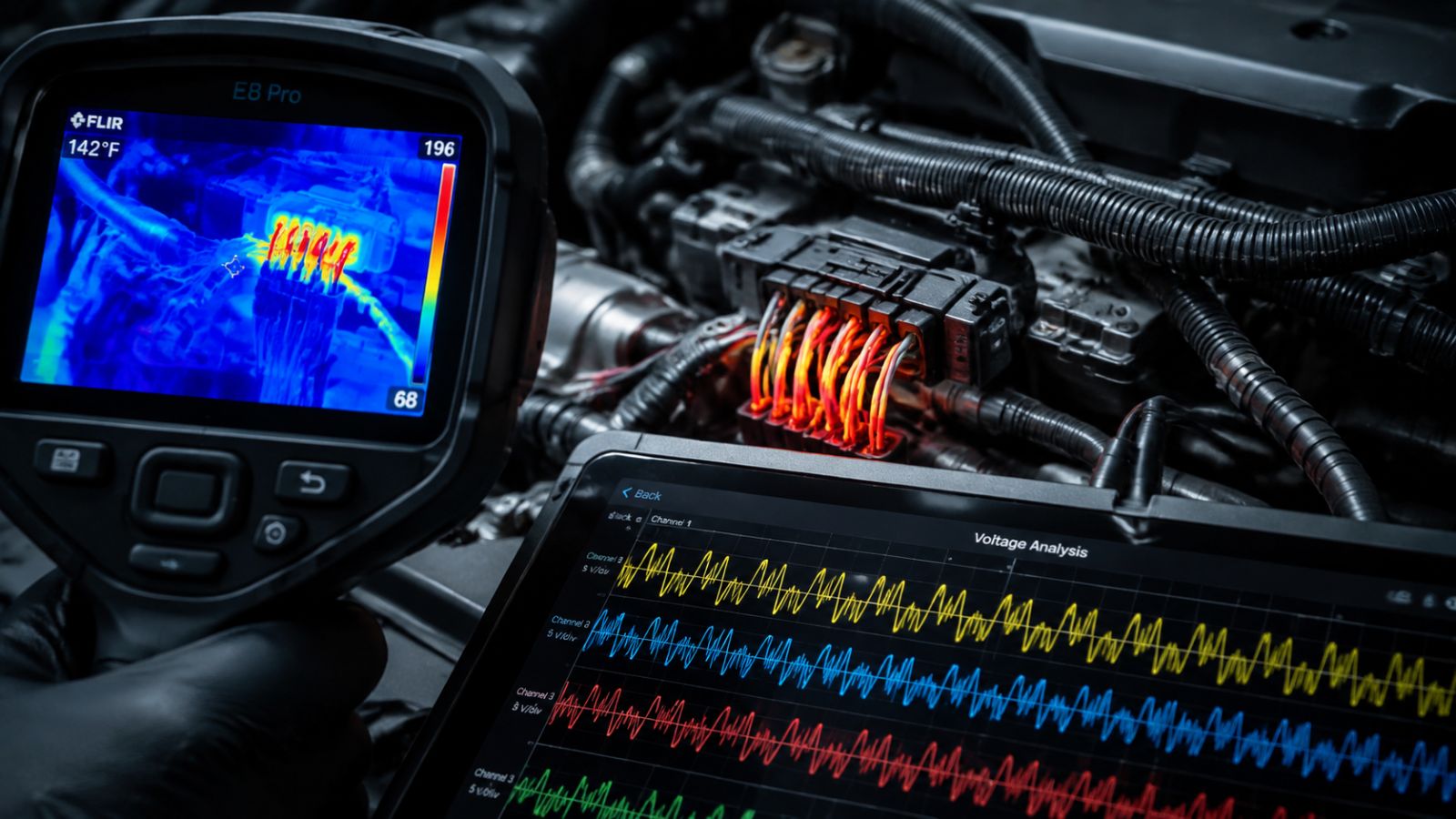
Hot weather and engine heat soak can spike the resistance in your Ford sensors. This electrical change often results in an annoying, intermittent check engine light. Central Florida heat causes voltage drifts in Mass Air Flow and Crankshaft Position sensors, throwing false diagnostic trouble codes. Advanced scope analysis pinpoints circuit heat-soaking before shops replace functional components.
US-27 Idle Heat and Sensor Voltage Drift
Heat waves on US-27 and Abshier Boulevard put a real strain on Ford F-150 and Explorer EcoBoost engines. Underhood heat often tops 210 degrees, which causes the hot-wire element in the Mass Air Flow sensor to report incorrect voltage data. When sitting in idling traffic near Marion County traffic bottlenecks, ambient air cannot cool the engine bay, leading to heat-soaking that skews reference signals sent to the Powertrain Control Module. The PCM interprets these erratic thermal resistance spikes as air-fuel imbalance errors, triggering immediate check engine light illumination without a mechanical component breakdown.
Electrical Stress Parameters
| Primary Symptom | Intermittent MIL illumination at idle, rough engine surging, sudden loss of boost pressure |
| Target Component | MAF Sensor Hot-Wire Element / CHT (Cylinder Head Temp) Harness Connectors |
| Specialized Tooling | PicoScope 4425A Lab Scope, IDS Oscilloscope Interface, Thermal Imaging Camera |
| Local Stressor | 95°F+ ambient heat, 90% relative humidity, heat-soak during idling on US-27 |
| High-Risk Profile | 2015–2023 Ford F-150 3.5L EcoBoost & Explorer 2.3L commuting short stop-and-go routes |
Thermal Degradation Mechanics
Ford engine management systems rely on precise signal returns between 0.5 and 4.5 volts to calculate fuel injection mass. Under standard operating conditions, the Mass Air Flow sensor maintains a heated platinum wire at a constant temperature above ambient intake air. Incoming airflow cools this element, requiring the internal circuit to vary current to maintain the temperature baseline.
Extended idling in Belleview summer heat removes front-grille airflow while asphalt surface temperatures exceed 140 degrees Fahrenheit. The intake plenum heat-soaks, driving sensor body temperatures beyond internal component ratings. High ambient heat increases electrical resistance across copper harness wiring, causing a voltage drop along the signal return ground line, which often requires comprehensive auto repair services to diagnose accurately.
This thermal resistance spike distorts the reference voltage return to the PCM logic board:
- Signal Drift Phase: The micro-controller detects a signal variance that violates factory air-fuel mapping tables for longer than two engine firing cycles.
- Terminal Pin Expansion: Thermal expansion inside the harness terminal pins causes micro-fretting and momentary open-circuit faults rather than a physical sensor head failure.
- DTC Storage: The PCM interprets the resulting ground voltage offset as an out-of-range sensor condition, setting permanent fault codes P0113 or P0171.
Precision Isolation Protocols
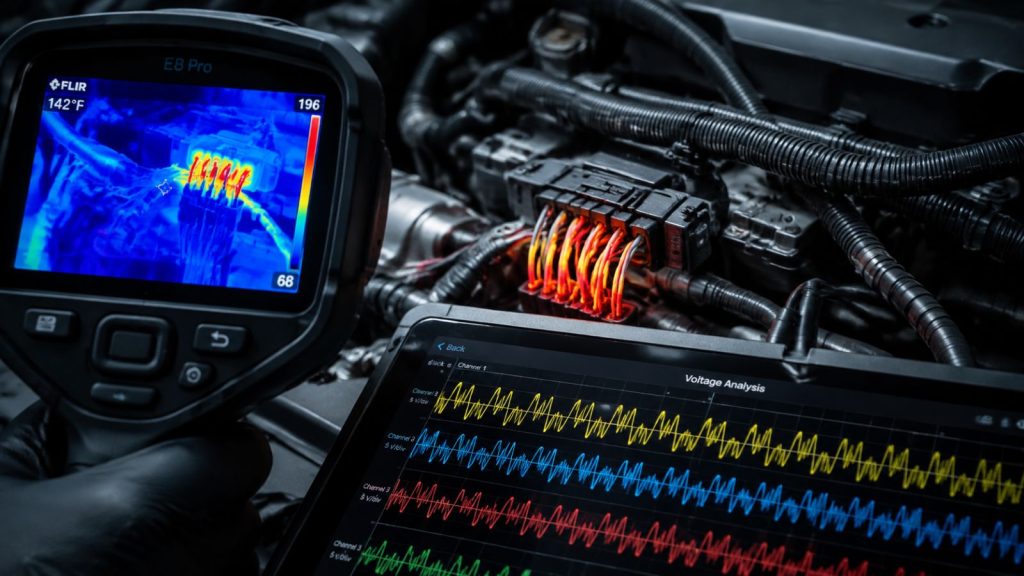
Replacing parts based solely on stored trouble codes leads to repeat customer returns when heat-soak is the primary catalyst. Our diagnostic process targets live voltage fluctuations across circuit grounds using thermal simulation.
- Scan Tool PID Snapshot: Connect Ford IDS to capture freeze-frame data at the moment the DTC is stored. We cross-reference engine coolant temperature against intake air temperature values to verify a heat-soak offset greater than 35 degrees Fahrenheit.
- Back-Probe Voltage Drop Testing: Attach a digital multimeter directly across the MAF sensor ground circuit and the negative battery terminal. With the engine hot and accessories running, ground circuit voltage drop must remain below 50 millivolts.
- Thermal Scope Waveform Analysis: Monitor the 5-volt reference signal line using a four-channel lab scope while applying localized heat to harness junction points. Look for trace distortion, noise spikes, or voltage drops as terminal pins thermally expand.
- Terminal Tension Verification: Inspect female harness connectors using dedicated test pins to verify pin-fit retention force. Corroded or loose harness terminals showing witness marks require repinning rather than full sensor replacement.
Shop Note: Replacing a MAF sensor without verifying terminal tension on hot Ford wiring harnesses almost always results in a secondary light within 14 days of summer driving.
Stop Unnecessary Component Replacement
Driving with an active check engine light caused by sensor circuit thermal drift can force your Ford PCM into default limp modes, running rich mixtures that eventually destroy catalytic converters. Replacing healthy sensors because of unverified diagnostic codes costs hundreds in unnecessary parts outlay, though flexible auto repair financing options can help cover unexpectedly complex electrical work. Our shop diagnoses the root circuit fault before recommending component replacement.
Skip dealership waitlists and get definitive diagnostic answers from technicians who understand local summer failure patterns. Learn more about our shop or visit Gregg Smith Automotive at 6202 SE Abshier Blvd, Belleview, FL 34420 for targeted electrical and engine diagnostics.
Frequently Asked Questions
Can Florida heat cause a Ford check engine light without a broken part?
Yes. Ambient underhood thermal soak increases copper wiring resistance and shifts sensor output voltages outside PCM limits, triggering diagnostic trouble codes P0113 or P0171 without physical component degradation. Advanced oscilloscope testing at Gregg Smith Automotive verifies circuit heat-soaking before replacing fully functional sensors.
Will a heat-related check engine light reset itself when the engine cools down?
No. Even if normal operating resistance restores after cooling, the powertrain control module stores temporary signal disruptions as permanent fault codes. The diagnostic trouble code remains stored until clear routines execute, meaning the light stays illuminated until cleared via dedicated diagnostic equipment.
Does excessive underhood heat damage Ford engine wiring harnesses permanently?
Yes. Sustained heat-soaking degrades protective insulation and degrades female connector pin tension through repeated thermal expansion. Over time, loose terminal fits create micro-fretting corrosion, generating persistent ground voltage drops that eventually require harness repinning or terminal repairs.
Can driving in high ambient heat cause a Ford EcoBoost to lose power?
Yes. Skewed intake air temperature sensor signals caused by thermal drift prompt the PCM to enter protective engine maps. The computer retards ignition timing and reduces turbocharger boost pressure to safeguard against detonation, causing noticeable power loss during heavy Belleview traffic commuting.
Does installing an aftermarket cold air intake prevent thermal check engine lights?
No. Unshielded metal or thin plastic intake tubing often conducts engine bay heat faster than factory-insulated airboxes, worsening intake air temperature signal drift. Proper thermal heat shielding and verified harness ground connections provide the only reliable protection against ambient circuit interference.