

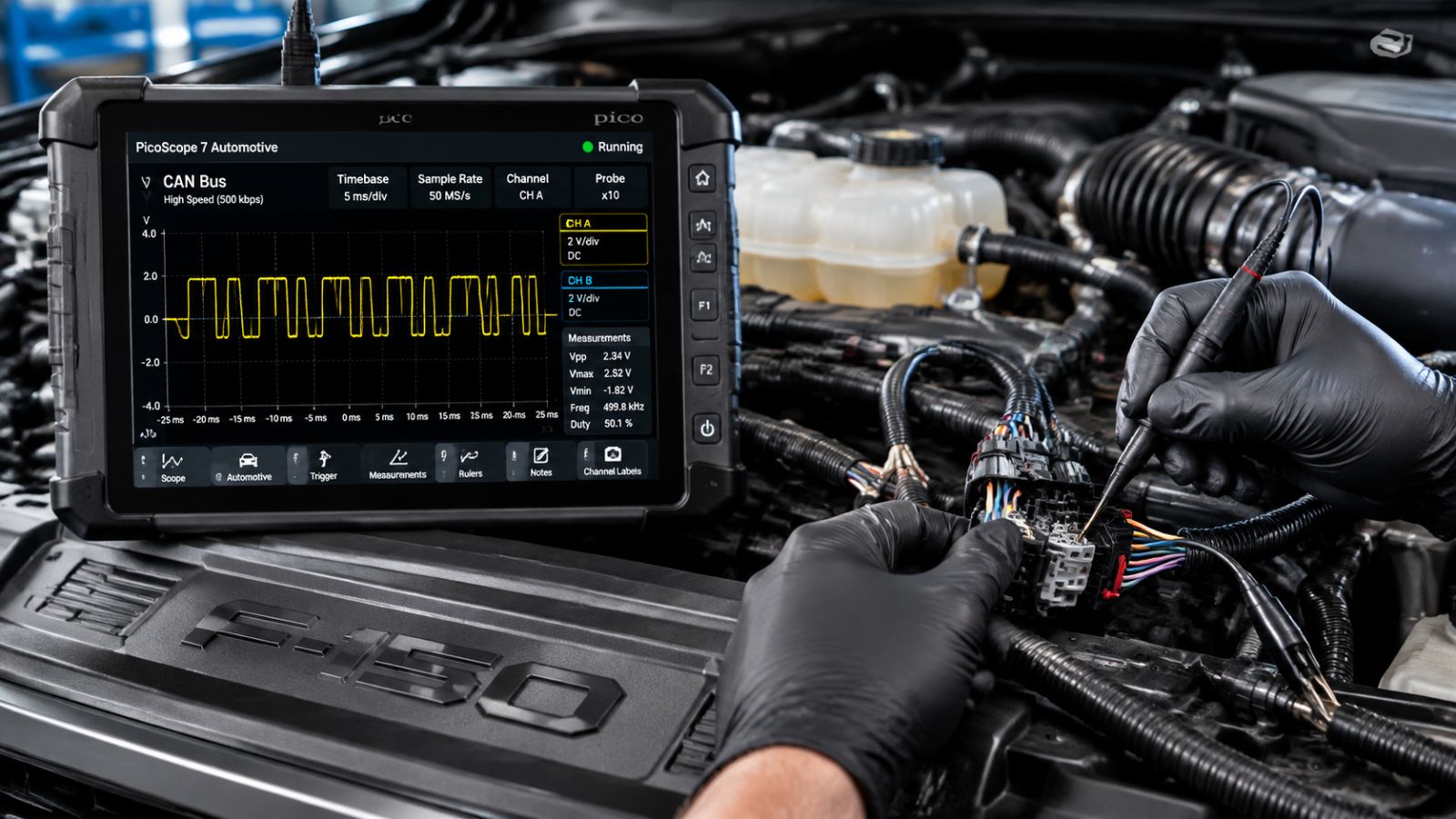
High ambient humidity combined with thermal cycles across US-27 triggers micro-fretting corrosion on Ford Body Control Module ground terminals and CAN-bus connectors. Central Florida rainstorms force moisture into unsealed engine bay junctions, inducing phantom diagnostic trouble codes and battery drains. Advanced scope testing isolates dynamic voltage drops before shops replace functional modules.
Belleview Downpours and Terminal Pin Oxidation
Hard rain creates a mess for drivers on US-27. Road grime and water fly up into Ford F-150 wheel wells. This moisture can travel far enough to coat the vital wiring harnesses hidden along the Super Duty frame. Moisture settles into the terminal connectors when the air gets thick. These droplets act as a bridge between different metals, starting a galvanic process that degrades the hardware. Copper oxide crust builds up a stubborn layer of resistance on 5-volt ground circuits. This makes the Powertrain Control Module see wrong sensor data and turn on warning lights even though the parts are fine.
Electrical System Stress Parameters
| Diagnostic Metric | Technical Specification |
| Primary Symptom | Intermittent dash gauge sweep, dead battery after sitting overnight, random U-code communication dropouts |
| Target Component | Frame Rail Ground Stud G101 / Smart Junction Box Connector Pins / CAN-Bus Gateway |
| Specialized Tooling | PicoScope 4425A 4-Channel Oscilloscope, Ford IDS/FDRS Diagnostic Software, Amp Clamp |
| Local Stressor | 95%+ relative humidity, standing floodwater along SE Abshier Blvd, 180°F underhood thermal soak |
| High-Risk Profile | 2015–2023 Ford F-150, Super Duty, and Explorer platforms commuting daily through Belleview storms |
Advanced Electrical Degradation Mechanics and Circuit Failure Analysis
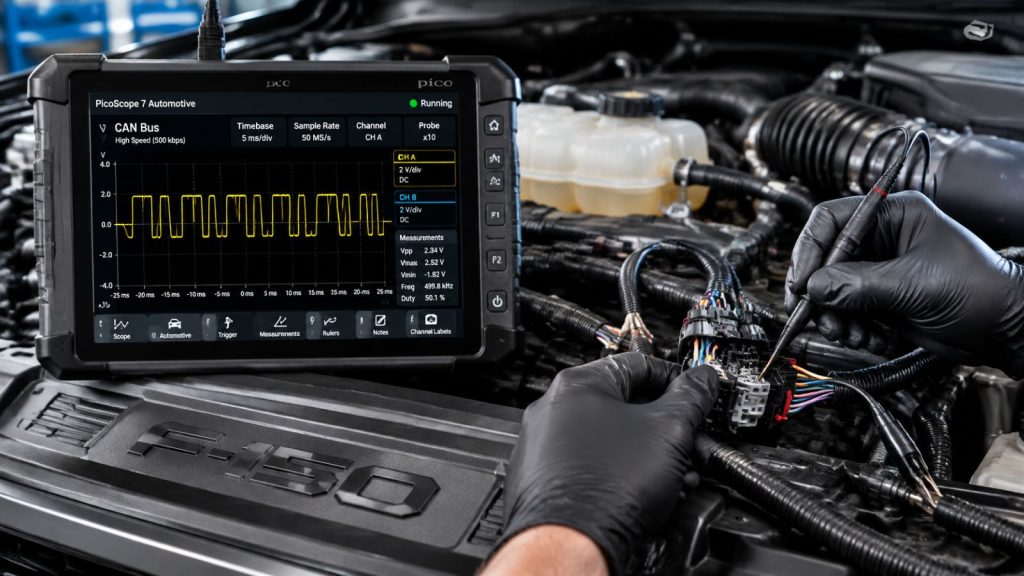
Ford multiplexed vehicle networks rely on clean 5-volt reference signals and high-speed CAN-bus differential voltage lines to communicate between module nodes. Standard operating logic demands stable ground return paths maintaining less than 30 millivolts of resistance differential under total circuit load.
Driving through standing water on Belleview roadways submerges frame-mounted harness grounds under high mineral-content water. As underhood heat rises past 180 degrees Fahrenheit, trapped moisture evaporates, leaving salt deposits that corrode copper strands inside sealed terminal eyelets. High ambient humidity accelerates galvanic corrosion where steel chassis fasteners contact brass harness rings, building an invisible layer of resistive scale.
When electrical current encounters this high-resistance barrier under dynamic operational load, the circuit collapses:
- Galvanic Oxide Formation: Moisture triggers electrolysis between copper core wires and steel ground studs, forming green copper carbonate scale that restricts electron movement.
- Micro-Fretting Motion: Engine vibration during stop-and-go commuting wears silver plating off female module connector pins, exposing underlying base metal to oxidation.
- CAN-Bus Signal Corruption: A 200-millivolt ground drop skews CAN-High and CAN-Low voltage differentials, corrupting data packets and causing the PCM to lose module communication.
Shop Note: A multimeter will often show a healthy 12.6 volts on an unloaded circuit, hiding ground corrosion that only collapses when real current flows through the load.
Advanced Electrical Precision Isolation Protocol
Changing fuses or swapping control modules based on raw U-codes wastes time and money while leaving corroded ground studs intact. Our electrical diagnostic sequence isolates dynamic voltage drops, parasitic amperage draws, and signal noise across live circuits using specialized testing tools.
Our four-stage diagnostic workflow targets exact electrical failure thresholds:
- FDRS Network Mapping: Connect Ford FDRS diagnostic software to map every active module on the High-Speed CAN bus. We review freeze-frame environmental data to verify if network communication drops align with ambient temperature spikes or moisture events.
- Dynamic Ground Voltage Drop Testing: Back-probe ground circuits at frame stud G101 and the BCM harness using a digital multimeter while activating high-draw accessories. Ground circuit voltage drop must remain strictly below 50 millivolts; anything higher indicates terminal pin oxidation.
- Scope Signal Waveform Analysis: Attach a PicoScope four-channel oscilloscope across CAN-High and CAN-Low lines to capture real-time data packets. Square-wave signal distortion, noise spikes, or voltage offsets pinpoint micro-fretting pin damage inside connector junction blocks.
- Parasitic Amperage Trace: Clamp a low-range current probe over the negative battery cable with the vehicle shut down and network modules sleeping. Parasitic draws exceeding 50 milliamperes require individual fuse circuit isolation to locate stuck relays or water-logged door modules.
Diagnostic Verdict: A 2020 F-150 came in after two shops replaced its alternator and battery to fix recurring power steering shutdown warnings. Our PicoScope showed ground stud G101 under the cab had developed 320 millivolts of resistance due to hidden frame rail corrosion; cleaning the stud and repinning the ring terminal ($45 total fix) permanently restored power steering.
Precision Repair Action Plan
Ignoring intermittent Ford electrical glitches risks leaving you stranded on Abshier Boulevard with a dead battery or sudden steering power loss. Replacing modules or alternators based on static fault codes leads to expensive parts bills without fixing the root wiring fault. Our shop pinpoints the exact corroded wire, loose pin, or grounded stud before ordering a single component.
Avoid multi-week dealership delays and unneeded parts replacement. Visit Gregg Smith Automotive at 6202 SE Abshier Blvd, Belleview, FL 34420 for targeted electrical system diagnostics.
Frequently Asked Questions
Can Florida humidity cause Ford electrical problems without a blown fuse?
Yes. Extreme relative humidity causes galvanic corrosion inside wiring harness connectors, increasing circuit resistance and creating voltage drops that trigger module error codes without blowing a fuse. Advanced scope testing at Gregg Smith Automotive isolates these hidden resistive faults before replacing functional components.
Will a weak battery ground clear itself once the engine warms up?
No. High ambient heat increases electrical resistance across corroded ground studs, worsening voltage drop issues as underhood temperatures rise during daily driving. Permanent repair requires unbolting the stud, wire-wheeling copper scale, and repinning oxidized harness terminals to restore clean ground continuity.
Does water under the cabin floor mat cause Ford module failure?
Yes. Rainwater entering through worn windshield seals or cab vents pools along floor wiring channels, submerging Smart Junction Box connectors and causing short circuits. Trapped moisture accelerates pin micro-fretting, triggering phantom U-code network communication dropouts across the entire vehicle CAN-bus network.
Can a bad ground stud make a Ford transmission shift hard?
Yes. Powertrain modules rely on stable reference grounds under 30 millivolts to operate shift solenoids, and voltage drops cause delayed hydraulic line pressure adjustments. Skewed sensor signals result in harsh gear engagement, erratic gear hunting, and premature transmission clutch plate wear during heavy commuting.
Is a multimeter enough to diagnose intermittent Ford electrical faults?
No. Standard multimeters apply minimal test current that fails to reveal high-resistance voltage drops occurring when full operational loads pass through corroded terminals. Oscilloscopes and dynamic load testing are required to capture live signal distortion, square-wave degradation, and transient voltage spikes.