

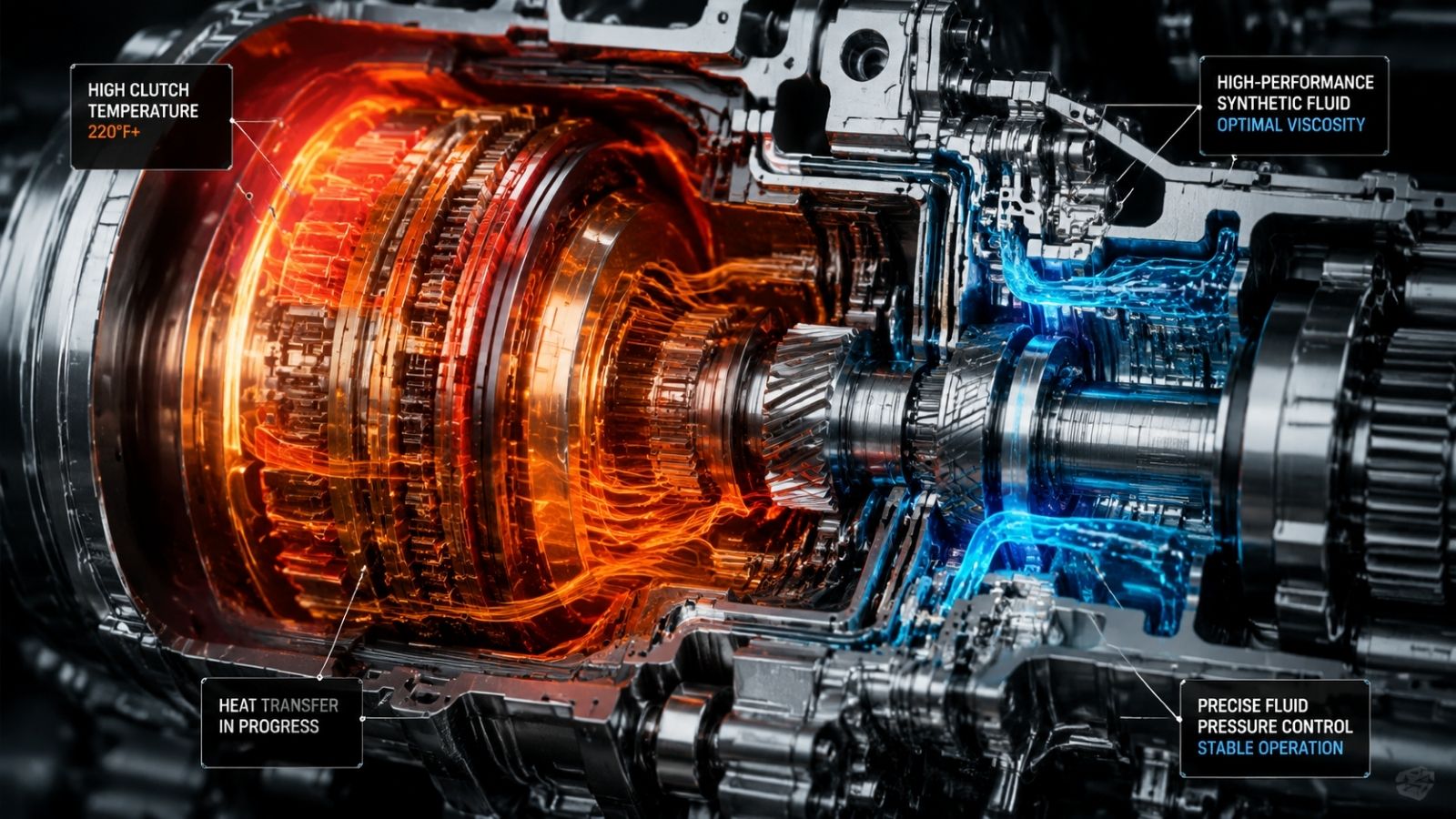
Ford transmission service before 100,000 miles can identify fluid breakdown, valve body wear, and heat-related damage before shifting problems appear. Belleview drivers facing Florida heat, stop-and-go traffic, and towing demands benefit from inspections that evaluate fluid condition, transmission temperature, adaptation data, and component wear instead of relying only on mileage.
Your Ford needs a checkup before the odometer hits 100,000. Mechanics look for degraded oil and valve body friction. Catching these problems now saves you from jerky gear changes later on. Belleview drivers facing Florida heat, stop-and-go traffic, and towing demands benefit from inspections that evaluate fluid condition, transmission temperature, adaptation data, and component wear instead of relying only on mileage.
Quick Ford Transmission Diagnostic Reference
| Quick Failure Snapshot | Technical Detail |
| Primary Symptom | Delayed engagement, harsh shifts, slipping sensation, vibration, or inconsistent gear changes |
| Target Component | Transmission fluid, clutch packs, valve body, solenoids, torque converter, adaptive shift controls |
| Specialized Tooling | Scan tool data analysis, transmission temperature monitoring, fluid inspection equipment, pressure testing tools |
| Local/Environmental Stressor | Florida heat cycles, heavy US-441 traffic, towing loads, extended idling, highway temperature buildup |
| High-Risk Profile | F-150 towing vehicles, Explorer SUVs, Escape models, fleet-like daily commuters, high-mileage family vehicles |
Ford automatic transmissions operating along US-441 and SE Abshier Blvd suffer severe fluid oxidation, friction lining shear, and thermal degradation long before hitting the manufacturer-suggested 100,000-mile interval. Ambient 95°F summer heat combined with heavy Marion County traffic drives fluid temperatures well past the safe 200°F threshold, accelerating varnish formation inside the main control valve body.
The Mechanical Physics Behind Premature Ford Transmission Failure
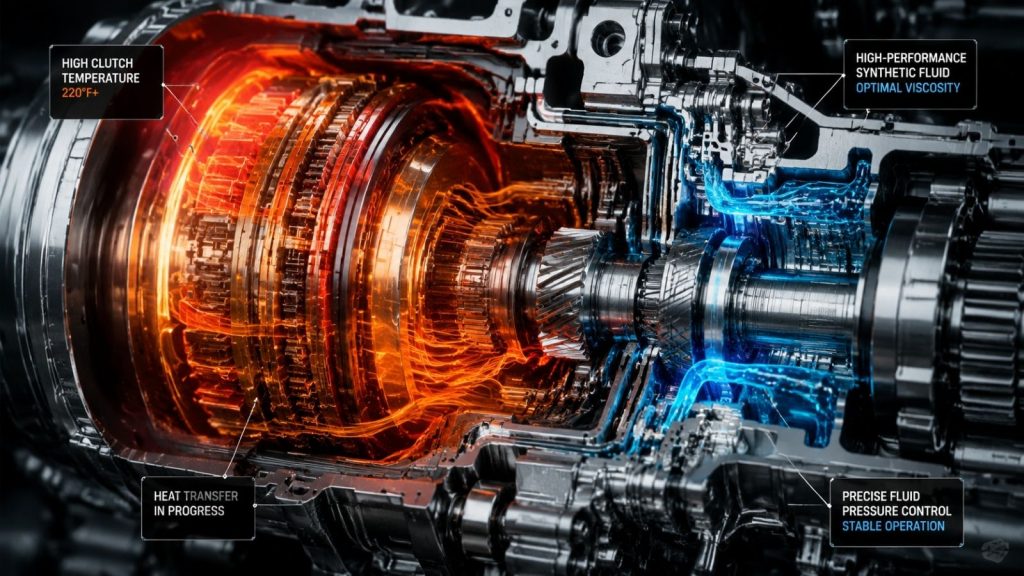
An automatic transmission generates power transfer through controlled hydraulic pressure. The pump pushes fluid through the valve body, where electronic solenoids route pressure to clamp friction plates and steel drive disks together inside clutch packs.
Excessive operating heat disrupts this physical process. When transmission sump temperatures cross 220°F, long-chain polymer viscosity modifiers inside Mercon LV and ULV synthetic fluids shear permanently.
As viscosity drops, the fluid layer thins out. Steel plates press directly against clutch facings without an adequate protective film, generating micro-abrasive metallic debris and stripping paper-backed friction material.
Shop Floor Reality: A Ford 10R80 10-speed transmission running at 230°F oxidizes its fluid four times faster than one operating at 190°F. Waiting for the 100,000-mile mark on factory fluid almost guarantees scored aluminum valve body bores or CDF clutch drum sleeve movement.
Suspended clutch debris moves through hydraulic channels. Larger fragments hit the filter, but microscopic particulate sweeps into 0.020-inch solenoid orifices.
The physical chain reaction accelerates:
- Varnished fluid binds variable-force solenoids.
- Hydraulic pressure cross-leaks past worn valve body lands.
- Clutch packs slip during application, generating intense friction heat that warps steel drive plates and glazes friction linings.
Proactive Diagnostic & Service Protocol
Waiting for a wrench icon or Check Engine Light means internal hard-part wear has already occurred. We evaluate hydraulic integrity using live data and physical fluid sampling.
1.Review Vehicle Operating History:Gathering usage data.
We analyze mileage, trailering frequency, daily traffic exposure on SE Abshier Blvd, and customer-reported shift flare or hesitation, while also considering applicable service specials and financing options.
2.Evaluate Transmission Live Data:FDRS scan tool review.
We connect diagnostic software to record real-time fluid thermal history, solenoid adaptive learning values, torque converter slip speed, and stored pressure fault codes.
3.Inspect Fluid Physical Integrity:Fluid sampling.
We extract a fluid sample to verify optical density, color transition from translucent red to opaque dark brown, scorched scent profiles, and suspended metallic debris during an oil change.
4.Verify Mechanical & Pressure Performance:Physical verification.
If adaptive values or fluid samples show degradation, we execute a line pressure test and drop the pan to evaluate magnet debris accumulation before replacing internal filter elements and fresh Mercon-spec fluid, along with checking overall wheel alignment.
Prevent Costly Transmission Replacement
Ignoring early fluid breakdown and pressure shifts allows minor valve body sticking to turn into total clutch pack failure. Independent agility allows our team to address early thermal degradation and fluid contamination without waiting through long dealership backlogs.
Schedule your Ford transmission inspection with Gregg Smith Automotive today. Call or visit our shop at 6202 SE Abshier Blvd, Belleview, FL 34420.
Frequently Asked Questions
Should a Ford transmission be serviced before 100,000 miles?
Yes. Ford transmissions operating in high-heat environments like Florida require fluid and filter changes every 30,000 to 45,000 miles to prevent thermal fluid breakdown, solenoid sticking, and premature clutch pack wear.
Does Ford transmission fluid last 100,000 miles?
No. Ford transmission fluid life depends on operating temperature, towing load, and traffic conditions rather than mileage alone. Heavy heat cycles accelerate additive breakdown and fluid oxidation long before 100,000 miles.
Can a Ford transmission have problems without a warning light?
Yes. A Ford transmission can suffer valve body wear, clutch glazing, and adaptive pressure drift without setting a diagnostic code. Delayed engagement or shift flare often occurs long before electronic threshold faults trigger a dash light.
What does Ford transmission service check?
Ford transmission service evaluates fluid color, optical density, thermal operating history, solenoid adaptive values, line pressure integrity, and pan magnet debris to verify overall internal health.
Is transmission service different for Ford trucks and SUVs?
Yes. Ford trucks and towing SUVs experience higher thermal loads and clutch duty cycles than lighter passenger vehicles, requiring earlier fluid exchanges and closer monitoring of torque converter slip parameters.