

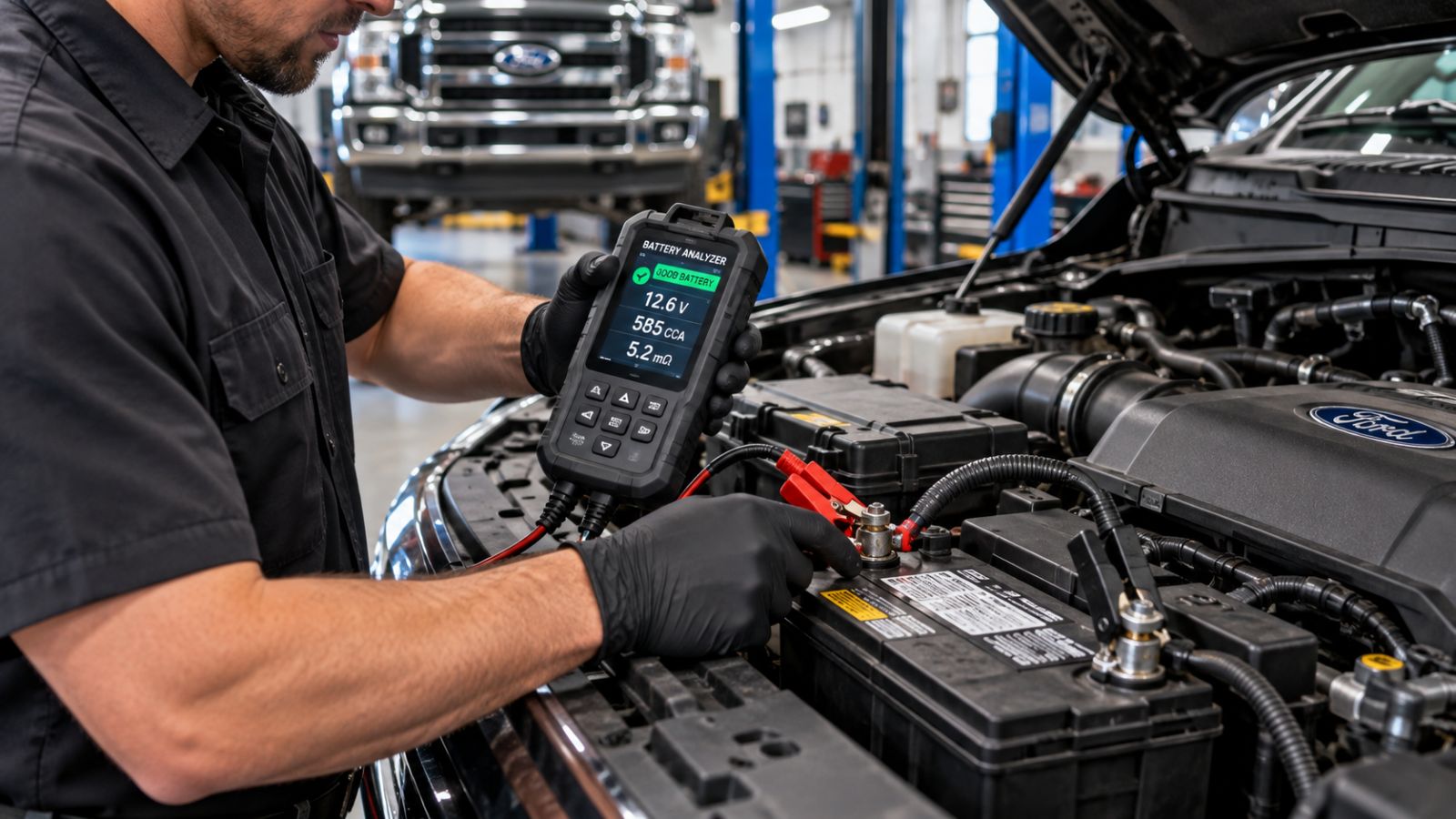
Florida summers destroy Ford F-150 and Explorer parts. High temperatures bake the brake pads and weaken hoses while battery plates suffer from internal sulfur buildup. The thick air near SE Abshier Blvd combines with idling to rot your transmission fluid. Your car loses power and might quit on the highway during your next October drive.
Late-summer heat-soaking actively degrades critical cooling, braking, and electrical components across local Ford platforms. Sitting in Belleview corridor traffic during a 95 degree heatwave kills your battery. The high heat destroys coolant additives and triggers plate shedding, which leads to sudden vehicle breakdowns. Heat wears out seals and starves the battery. A reliable family trip can quickly turn into a roadside emergency because of these hidden leaks.
Ford Road Trip Inspection Baseline
We track concrete failure metrics to catch road-trip reliability risks before highway cruising speed exacerbates component strain.
| Stress Factor | Observed Field Metric |
| Primary Symptom | Brake pedal pulsation down steep grades, slow engine crank, high-speed coolant temperature spikes |
| Target Component | Cast-Iron Brake Rotors, EPDM Cooling Hoses, AGM Battery Lead-Acid Plates |
| Specialized Tooling | Midtronics DSS-5000 Battery Analyzer, Midtronics Brake Fluid Refractometer, Thermal Imager |
| Local/Environmental Stressor | 95°F+ summer heat-soak accumulation, high ambient humidity, heavy stop-and-go traffic |
| High-Risk Run / Profile | High-mileage Ford Explorers, F-150s, and Escapes preparing for long-distance highway travel |
Mechanical Physics Behind Post-Summer Thermal Degradation
Under standard operating conditions, organic or semi-metallic brake friction material transfers kinetic energy into thermal dissipation across ventilated cast-iron rotors without exceeding 400°F. Engine cooling systems maintain a closed 15 PSI pressure state, allowing a 50/50 ethylene glycol mix to absorb engine block heat and release it efficiently through radiator cooling passages.
Months of high-ambient summer driving around Belleview alter these physical baselines. Continuous heat-soaking drives brake rotor surface temperatures past critical thresholds during routine stopping.
Excessive heat causes binding resins within the brake pads to outgas, forming a smooth, low-friction glaze across rotor contact surfaces. Simultaneously, high under-hood ambient temperatures accelerate water loss within battery electrolyte solutions, causing lead-sulfate crystals to harden on internal grid plates. This micro-sulfation reduces cold-cranking capacity while degrading coolant inhibitors, leaving internal water pump seals exposed to galvanic corrosion and cavitating fluid dynamics.
Proactive Fall Inspection Workflow
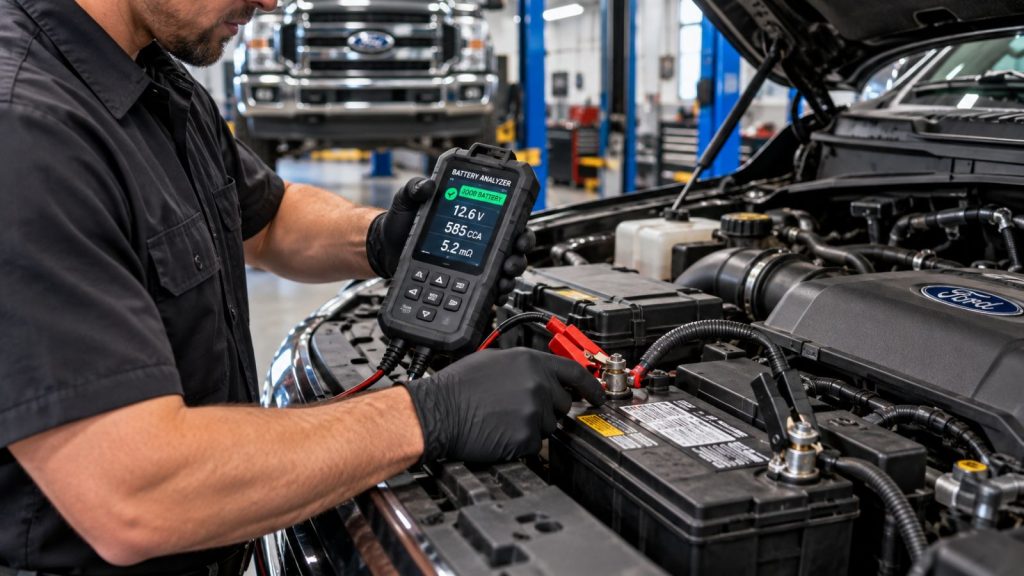
Catching thermal stress damage before embarking on long-distance highway trips requires a structured multi-point testing protocol.
- Step 1: Conductance and Reserve Battery Analysis. Connect a digital battery analyzer directly to battery terminal posts. Measure internal resistance, cold cranking amps (CCA) against factory rating, and conductance to identify plate micro-sulfation before dynamic charging fails under load.
- Step 2: Brake System Hydraulic and Physical Inspection. Test brake fluid boiling points using a digital refractometer to verify water absorption remains under 2%. Mount a magnetic dial indicator to front rotor faces to measure lateral runout, ensuring variation stays strictly under 0.002 inches.
- Step 3: Cooling System Pressure and Fluid Integrity Sweep. Pressurize the cooling circuit to 15 PSI using a hand pump and monitor for pressure decay over 15 minutes. Sample glycol concentration with an optical refractometer to verify freezing/boiling point protection and test for stray galvanic voltage across the radiator core.
- Step 4: Drivetrain and Accessory Belt Evaluation. Inspect main accessory drive belts for rib cracking, checking tensioner alignment with a laser belt pulley tool. Inspect ball joints, tie rod ends, and sway bar links for thermal boot degradation or grease purge.
Shop Note: Never top off a low Ford cooling system with plain tap water before a long road trip. Minerals in tap water react with hot aluminum cylinder heads, starting galvanic corrosion that clogs heater cores and radiator passages.
Prevent Highway Breakdowns at Our Belleview Repair Shop
Ignoring subtle pedal vibration, slow engine starts, or deteriorating coolant condition before a long road trip risks severe component failure miles from home. Operating a thermally stressed Ford at sustained 70 MPH highway speeds accelerates friction wear, turning minor maintenance into costly emergency towing and secondary repairs. Skip corporate dealership wait times and work directly with local technicians focused on keeping your vehicle reliable.
Book your comprehensive Ford vehicle inspection directly with Gregg Smith Automotive, located at 6202 SE Abshier Blvd, Belleview, FL 34420.
Frequently Asked Questions
Can summer heat damage a Ford battery before cold weather arrives?
Yes. High engine bay temperatures evaporate internal water content and accelerate lead-plate grid sulfation throughout summer months. This hidden damage starves the battery of reserve capacity, leading to sudden failure once ambient autumn temperatures drop slightly.
Does brake pedal vibration mean my Ford brake rotors are warped?
Yes. Surface vibration typically indicates uneven friction material transfer or thermal rotor distortion caused by intense heat-soaking. Resurfacing or replacing distorted rotors restores full pad contact, eliminating high-speed pedal pulsation during sudden highway stops.
Should cooling system fluid be replaced before fall road trips?
Yes. Corrosion inhibitors inside engine coolant break down after prolonged exposure to summer heat-soak cycles. Fresh coolant restores pH balance, protects internal aluminum water pump impellers, and maintains proper boiling point margins under heavy highway loads.
Can low tire tread depth cause hydroplaning during Florida fall rain?
Yes. Worn tread grooves cannot evacuate standing water effectively at highway speeds, causing tires to ride across water films. Maintaining at least 4/32-inch tread depth ensures proper wet-weather traction during sudden rainy conditions.
Will a worn accessory drive belt break during high-speed highway driving?
Yes. Summer under-hood heat hardens synthetic belt rubber, causing micro-cracking along inner ribs. High RPM highway driving increases tensile strain, snap-cleaving weakened belts and instantly killing power steering, alternator charging, and engine cooling function.