

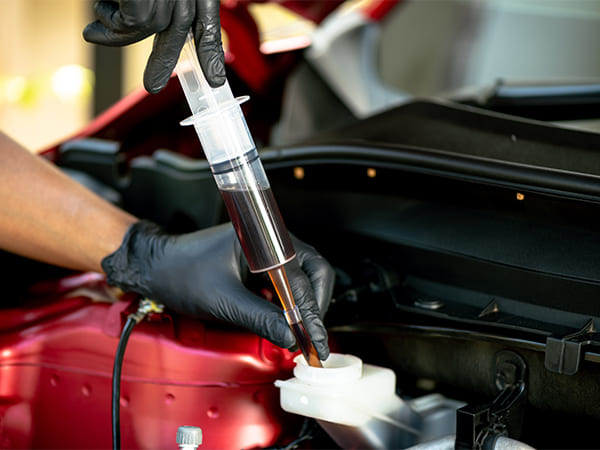
You may faithfully change your oil, rotate tires, and maintain your Acura’s filters — yet brake fluid often remains out of sight and out of mind. In a place like Belleview, FL, where humidity, heat, and seasonal rains challenge your car’s systems, your brake fluid must perform under stress. A timely brake fluid flush protects your hydraulic braking system from failure, corrosion, and degraded performance. In this article, we’ll explain what a brake fluid flush is, when to do it on your Acura, how the process works, the benefits, a real-world case, supporting data, and FAQs.
What Is a Brake Fluid Flush?
Brake fluid transmits the force from your foot on the pedal to the brake calipers or drums — it’s the hydraulic medium in your braking system. Over time, most brake fluids (such as DOT 3, DOT 4, etc.) absorb moisture from the air because they’re hygroscopic.
When water mixes with brake fluid:
- The boiling point drops. Under heavy braking, the fluid may vaporize, forming gas bubbles. Gas compresses more than liquid, which leads to a soft or spongy pedal and brake fade.
- Corrosion can begin inside brake lines, calipers, ABS components, and the master cylinder.
- The fluid darkens and becomes contaminated, reducing its ability to transmit pressure cleanly.
A brake fluid flush is the process of removing old, moisture-laden fluid from the entire braking system (reservoir, lines, ABS / modulator, calipers) and replacing it with fresh, manufacturer‑specified fluid. This restores performance and protects internal components.
When Should an Acura Get a Brake Fluid Flush?
The manufacturer’s schedule is always a safe baseline. According to the Acura maintenance guide, brake fluid should be replaced every three years, regardless of mileage.
But real-world conditions may warrant earlier service:
- Many Acura service sources suggest that in humid climates, a flush every 2–3 years is more prudent.
- A brake fluid moisture test (refractometer or electronic tester) can alert you if water content exceeds safe thresholds (often ~2–3 %). MISCO notes that a fluid with more than 3 % water content should be changed.
- If you notice symptoms (spongy pedal, ABS warnings, poor braking under load) before the 3‑year mark, you should flush early.
In Belleview’s climate — warm, humid, with seasonal storms — brake fluid may degrade faster than in drier regions, making vigilance especially important.
How the Brake Fluid Flush Process Works
A proper flush is more than just “bleeding” one caliper. Here’s a step‑by‑step of how a technician should do it:
- Elevate the vehicle and remove wheels to allow access to caliper bleed nipples.
- Inspect the reservoir — note fluid color, level, and condition.
- Choose the correct fluid — use the Acura‑specified DOT type (often DOT 3 or DOT 4), fresh and high quality.
- Bleed in the correct order (usually starting from the caliper farthest from the master cylinder) to purge air and old fluid.
- Cycle ABS / ESC internal passages (using diagnostic tool or pump procedure) to purge old fluid from internal valves or lines.
- Continue until fluid is clear, bubble‑free, and within water content specification.
- Seal bleeders, top off reservoir, reinstall wheels.
- Road test & verify — check pedal firmness, ABS engagement, and no residual warnings.
The goal is full replacement throughout the system, not a partial “top-off.” Many braking systems (especially with ABS) have hidden lines or valves that harbor old fluid unless properly purged.
Benefits of a Timely Brake Fluid Flush
- Restores firm, consistent brake pedal feel
- Reduces risk of brake fade or failure under stress
- Protects components from corrosion (lines, calipers, ABS units)
- Extends the life of your braking system
- Ensures safe braking in emergencies, especially in wet or steep conditions
In short: you’re preserving safety, performance, and avoiding costly repairs.
Case Study: Belleview Acura MDX & Humidity Stress
Scenario:
A 2016 Acura MDX owner in Belleview brought the car to the shop complaining of a slightly soft brake pedal after heavy rain, and occasional ABS warnings when braking in downpour conditions.
Findings:
- The brake fluid reservoir was dark and cloudy.
- Moisture test showed ~3.8 % water content — above safe thresholds.
- ABS internal passages, when bled, disgorged dark fluid unreached by standard bleeding.
Solution:
- A full brake fluid flush including ABS cycling was performed.
- After flushing, moisture was reduced below 1 %, fluid was clear, and pedal firm.
- The ABS warning no longer appeared, even during aggressive braking in the rain.
This example underscores how Belleview’s weather (high humidity, frequent rain) accelerates fluid degradation and why a full flush with ABS purging is crucial.
Expert-Backed Data on Brake Fluid Service
- Brake fluid water absorption rate: MISCO reports that fluid will absorb approximately 1 % moisture per year, meaning a two‑year old fluid may have 2–3 % water — enough to reduce boiling point substantially.
- Most manufacturers and pros recommend a flush interval of 2–3 years or when moisture exceeds safe levels.
- Acura’s published maintenance schedule list: “Replace Brake Fluid — Every Three Years Regardless Of Mileage.”
- NAPA recommends discarding an opened brake fluid bottle after 12 months due to moisture absorption.
Taken together, the data supports a more proactive approach in climates like Florida rather than a passive “wait for warning.”
Frequently Asked Questions
How often should I flush brake fluid on my Acura in Belleview, FL?
Typically every 2 to 3 years, but inspect fluid annually — Belleview’s humidity may push you toward the earlier side.
Can I drive my Acura with old brake fluid?
You might get away with it for a while, but you risk soft pedal feel, brake fade, or internal corrosion damage.
Does ABS warning light always mean bad fluid?
No — there are many causes, but fluid contamination is a common culprit, especially in wet or humid conditions.
How much does a brake fluid flush cost in Florida?
It varies by model and shop, but many independent shops would charge roughly $100 to $200, more if ABS purging or special equipment is needed.
Can I flush my Acura’s brake fluid myself?
If you have the proper tools, clean fluid, and understand ABS bleeding procedures, yes — but mistakes (air in lines, incomplete fluid removal) can lead to dangerous braking performance.
Final Thoughts: Don’t Let Your Brake Fluid Betray You
Brake fluid quietly does crucial work in your Acura — until it doesn’t. In Belleview’s climate, where heat and humidity accelerate fluid degradation, ignoring your brake fluid is a risk you cannot afford. Watch your pedal feel, inspect fluid regularly, and stick to a 2–3 year flush schedule, or sooner if symptoms emerge.
By staying ahead, you preserve safety, performance, and costly repairs down the road. Explore our other guides on brake pad health, ABS system maintenance, or fluid diagnostics — and when you’re ready, contact Gregg Smith Automotive to get your Acura’s brake fluid professionally flushed and inspected.