

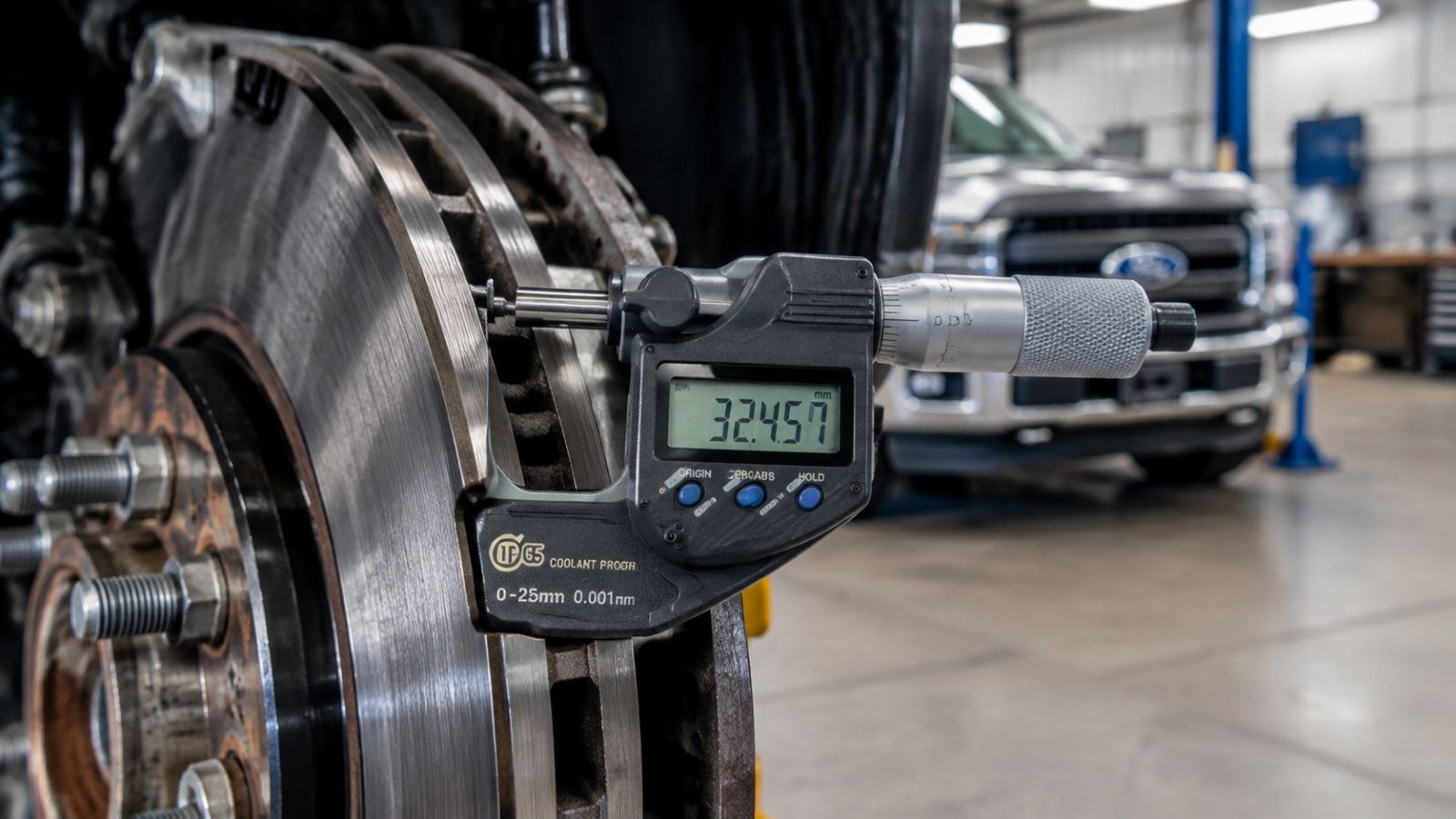
Ford digital inspection workflows reveal hidden mechanical failures on high-mileage trucks and SUVs in Belleview, Florida. By capturing microscopic fluid contamination, brake rotor thickness measurements, and live sensor waveforms, digital reports provide physical proof of wear caused by severe heat-soaking, heavy towing, and rural road stress.
High-mileage Ford F-150s and Explorers navigating SE Abshier Blvd frequently experience hidden vacuum hub seal blowouts, control arm bushing delamination, and timing cover seepage. Our digital inspections uncover these specific structural breakdowns by capturing high-resolution fluid sampling, scope waveforms, and physical measurement proofs long before dashboard lights illuminate.
Technical Inspection Reference
| Quick Failure Snapshot | Technical Detail |
| Primary Symptom | Front-end popping over bumps, subtle brake pedal pulsation, invisible oil loss, erratic 4WD engagement |
| Target Component | IWE vacuum hub seals, hydraulic control arm bushings, valve cover gaskets, brake rotors, turbo oil lines |
| Specialized Tooling | High-definition digital borescope, digital micrometer, PicoScope oscilloscope, optical refractometer |
| Local/Environmental Stressor | Marion County lime-rock dust, 95°F ambient heat-soaking, humidity, heavy towing on US-441 |
| High-Risk Profile | 100k+ mile F-150 EcoBoost trucks, Expedition SUVs, commercial Ford transit fleets, heavy farm haulers |
High-mileage Ford trucks driving through Belleview face severe environmental degradation. Moisture, airborne lime-rock dust, and intense heat-soaking degrade rubber seals, synthetic fluids, and metal contact faces long before component failure triggers a check engine light.
The Mechanical Physics Behind High-Mileage Ford Wear Patterns
Ford vehicles beyond 100,000 miles experience wear through repeated heat cycles, chemical breakdown, and mechanical loading. The failure pattern depends on the component design, operating environment, and how long the vehicle has compensated for developing wear.
Vacuum System Wear In Ford F-150 EcoBoost IWE Assemblies
The Integrated Wheel End (IWE) system uses engine vacuum to keep the front hub disengaged during two-wheel-drive operation.
Florida humidity, road debris, and repeated heat exposure can weaken the nitrile rubber sealing surfaces over time.
- Vacuum seal dries, cracks, and loses tension.
- Air leakage prevents complete hub disengagement.
- Partial gear contact creates grinding and metal debris.
During US-441 driving, a leaking IWE seal can allow the internal drive gear to contact the rotating hub assembly. The gear teeth develop witness marks as friction increases, sending metallic particles toward surrounding wheel-end components.
Heat Damage To Ford Engine Gaskets
Engine seals experience thousands of expansion and contraction cycles as aluminum components move between operating temperatures and cool-down periods.
On high-mileage EcoBoost engines, hardened gasket material can lose its ability to follow surface changes between mating components.
- Fluorosilicone seals become brittle from heat cycling.
- Aluminum surfaces expand and contract against hardened seals.
- Oil can migrate into spark plug wells or onto exhaust surfaces.
Small oil leaks may burn away before creating visible driveway spots, allowing the issue to progress without an obvious warning.
Suspension Rubber Fatigue Under Load
Ford suspension components absorb constant movement from braking, cornering, and road impacts. Fluid-filled bushings rely on internal hydraulic resistance to control movement and maintain alignment stability.
Over time, the materials degrade from repeated stress.
- Hydraulic fluid loses damping ability.
- Rubber sleeves separate from steel cores.
- Alignment angles change during acceleration and braking.
The result can include uneven inner tire wear, steering wander, and reduced suspension control as the vehicle accumulates mileage.
Proactive Diagnostic Workflow For High-Mileage Fords
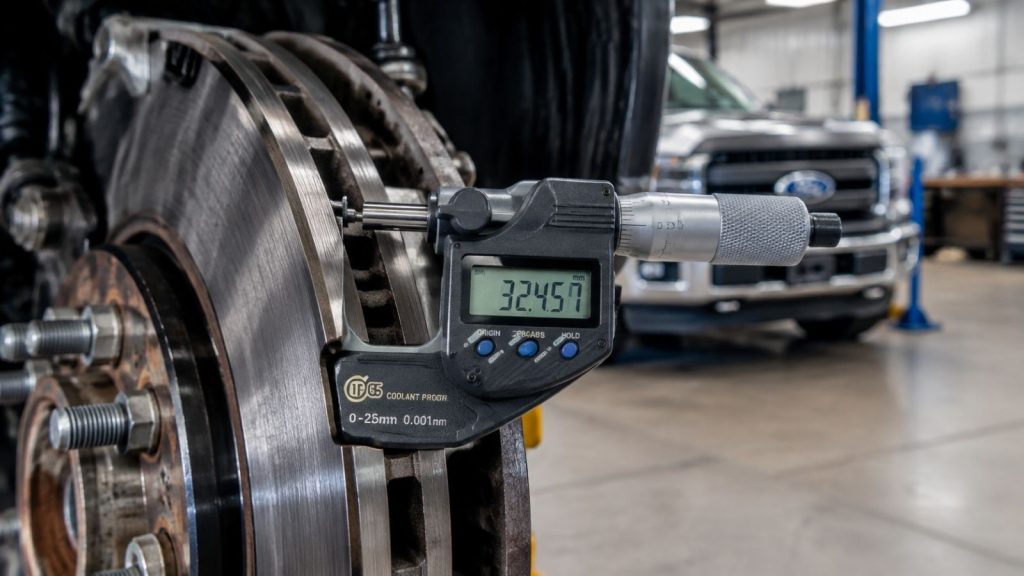
Guesswork has no place in high-mileage vehicle maintenance. We use advanced digital diagnostics to document exact component tolerances and physical wear patterns.
1.Analyze Fluid Physical Integrity:Digital fluid refractometer & scope analysis.
We draw fluid samples from the engine, transmission, cooling system, and differentials to measure:
- Optical density: Identifies thermal breakdown and oxidation rates.
- Moisture saturation: Detects water contamination in brake and transmission fluid.
- Particulate density: Quantifies microscopic metal and friction material wear.
2.Measure Braking & Friction Tolerances:Digital micrometer measurement.
Our technicians measure brake rotor thickness and pad friction material using calibrated digital calipers, comparing recorded numbers against Ford minimum discard specifications.
3.Inspect Hidden Mechanical Structures:High-definition borescope inspection.
We route an articulated camera probe into tight engine bays to inspect:
- Turbocharger oil feed lines for pinhole leaks.
- Intake valve faces for heavy carbon buildup.
- Timing cover sealing faces for hidden oil weeping.
4.Document Suspension & Drivetrain Play:Underbody camera documentation.
We apply mechanical leverage to ball joints, sway bar links, and control arms while recording video proof of excessive bushing deflection, boot tears, or grease loss.
Shop Floor Insight: A visual check often misses early IWE hub gear damage because the gears remain hidden inside the steering knuckle. Our digital scope captures clear photos of gear tooth rounding and metal particulate before the hub destroys the entire axle shaft.
Protect Your High-Mileage Ford At Gregg Smith Automotive
Ignoring early mechanical weeping, bushing play, and fluid breakdown leads to sudden breakdowns and expensive secondary repairs. Our comprehensive digital inspections give you clear photographic evidence, exact micrometer readings, and prioritized recommendations so you can make informed decisions.
Keep your truck or SUV running reliably without waiting on corporate dealership backlogs. Schedule your Ford digital inspection with Gregg Smith Automotive today. Call us or visit our facility at 6202 SE Abshier Blvd, Belleview, FL 34420, and ask about our oil service options, including routine oil changes.
Frequently Asked Questions
What is a Ford digital inspection?
A Ford digital inspection is a comprehensive health check where technicians use digital micrometers, borescopes, and high-resolution cameras to document component wear. Photos, videos, and precise measurements are compiled into an interactive report sent directly to the vehicle owner.
Does a digital inspection find leaks before they drip on the driveway?
Yes. High-definition camera probes uncover hidden valve cover weeping, turbocharger line seepage, and pinhole radiator leaks long before fluid accumulates enough volume to drip down skid plates onto the ground.
How often should a high-mileage Ford get a digital inspection?
A high-mileage Ford should receive a digital inspection every 12,000 miles or during every second oil service. Regular digital tracking helps monitor bushing deflection, brake rotor wear, and fluid degradation rates before parts fail completely.
Can a digital inspection show suspension play?
Yes. Technicians capture live video footage while applying pry-bar leverage to control arms, ball joints, and tie rods. This video evidence clearly demonstrates excessive rubber bushing tear, dynamic alignment shifts, and ball-joint looseness.
Why is digital inspection better than a standard paper checklist?
Digital inspections eliminate subjective guessing by providing hard visual proof, clear measurements, and transparent condition ratings. Vehicle owners can see exact photos of damaged parts and read precise caliper measurements right on their smartphone.