

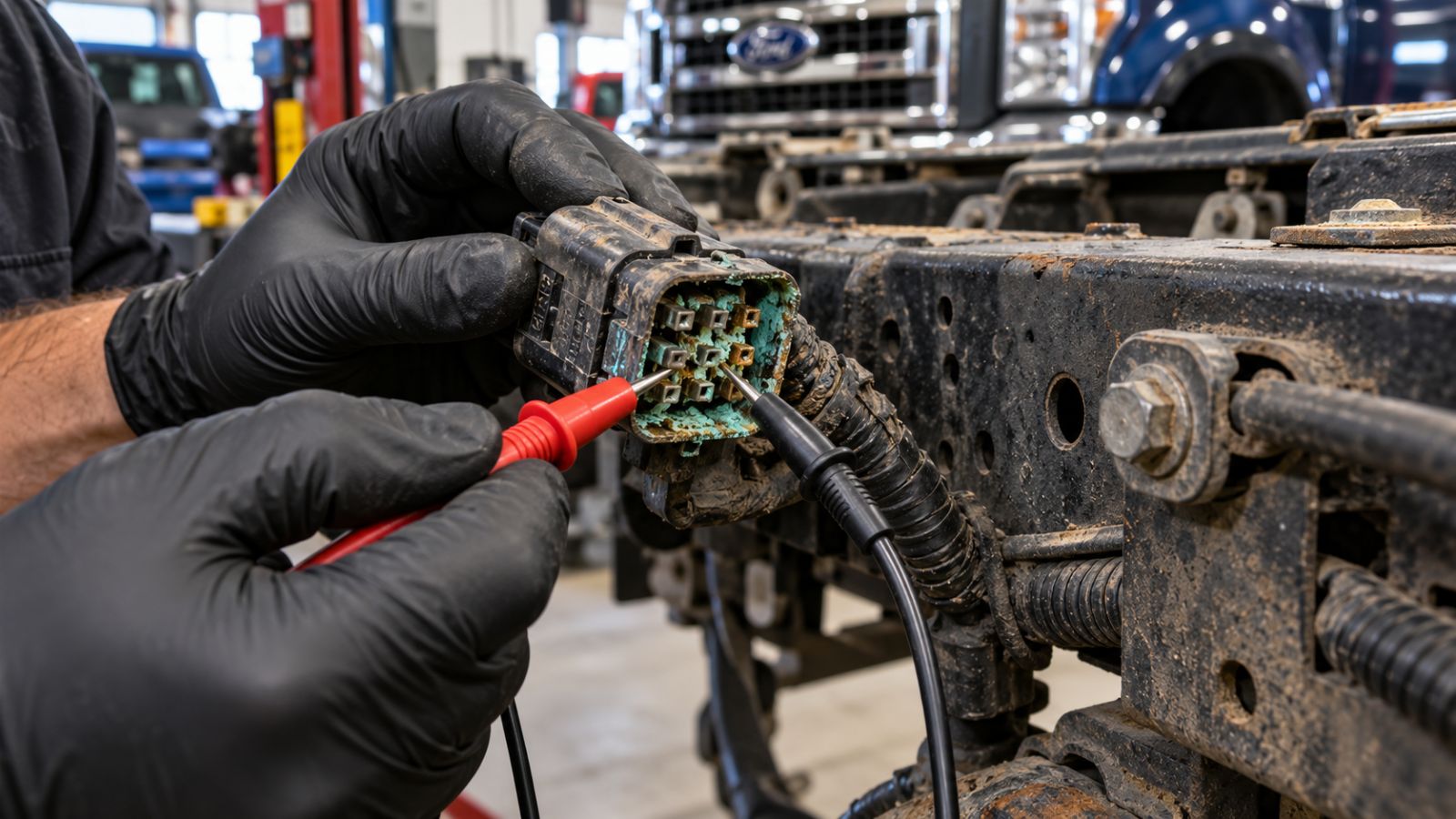
When hurricanes hit Belleview, the soggy air and rising water levels soak the electrical connectors tucked inside Ford frame rails. Capillary action draws salt-laden water past degraded weather seals, initiating galvanic oxidation on pin terminals. This causes voltage drops, dynamic CAN-bus communication failures, intermittent sensor dropouts, and sudden engine stalling.
High humidity and standing floodwater along US-301 in Belleview force tropical moisture past weatherproof seals on Ford F-150 and Super Duty frame-rail wiring harnesses, causing terminal oxidation, erratic CAN-bus communication faults, and intermittent engine stalls during peak hurricane season.
| Diagnostic Parameter | Field Data Specification |
| Primary Symptom | Intermittent dash cluster flickering, phantom ABS/traction warnings, engine stalling after rain |
| Target Component | C2106 / C2190 frame-rail inline connectors and PCM main harness pins |
| Specialized Tooling | Breakout box, PicoScope 4425A lab scope, milliohm meter, terminal pin tension gauges |
| Local/Environmental Stressor | Standing water on SE Abshier Blvd, 90%+ ambient relative humidity, tropical storm deluges |
| High-Risk Run / High-Risk Profile | 2015–2023 Ford F-150 / Super Duty trucks driven through deep standing water or towing heavy loads |
Thermal Vacuum Suction and Galvanic Decay
Inline body connectors rely on silicone perimeter seals and individual wire-cavity grommets to maintain a watertight seal. Under normal operating conditions, these seals maintain constant radial pressure against the connector housing, keeping ambient air and moisture away from the tinned copper terminals inside.
During Central Florida storm events, cold rainwater hits warm electrical connectors mounted along the driver-side frame rail. Rapid cooling drops the internal air pressure within the sealed housing, creating a vacuum that pulls atmospheric moisture past aging or heat-distorted silicone seals.
Once water enters the cavity, current running through energized circuits causes rapid galvanic corrosion. Electrolysis dissolves the protective tin plating, exposing raw copper to ambient oxygen and acidic rainwater. This reaction generates copper carbonate—visible as bright green verdigris—which increases circuit resistance, disrupts low-voltage reference signals, and bridges adjacent pins to cause short circuits across the CAN-bus high and low lines.
Shop Secret: Thermal cycling from heavy towing along Highway 441 bakes the rubber weather-pack seals, causing them to harden and shrink long before moisture ever touches the harness.
Isolating Intermittent Signal Dropouts
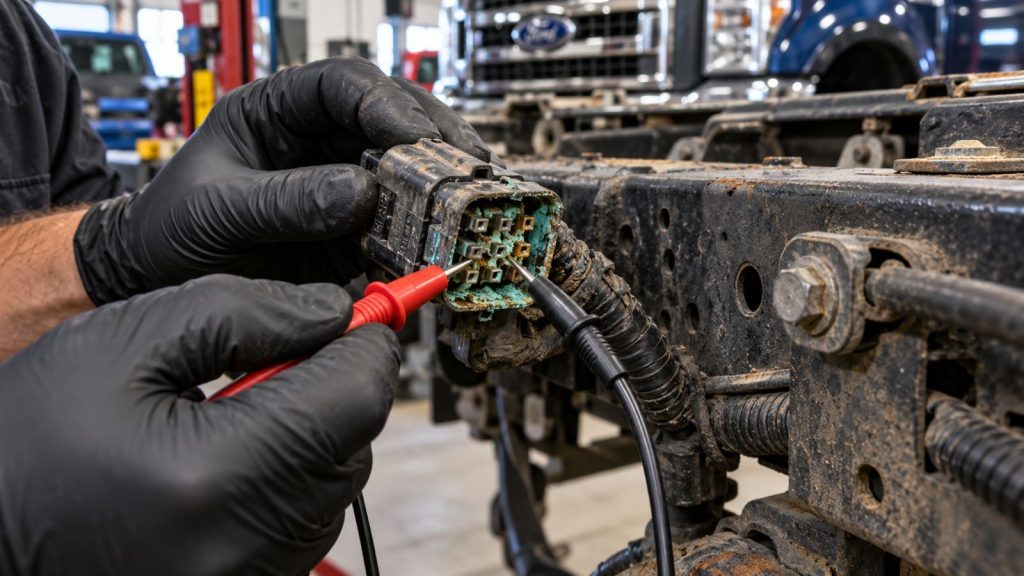
1. Visual Inspection & Pin Tension Verification:Check physical harness integrity.
Unlatch the primary connector bail arm. Inspect terminal cavities for green verdigris, pin discoloration, or bent male spades. Use a dedicated terminal feeler gauge to test female pin retention force; relaxed spring tension creates high-resistance connections even on clean pins.
2. Evaluating Loaded Voltage Drop: Place the circuit under active operational load.:Load the circuit under test.
Back-probe the suspect circuit with a digital multimeter set to DC millivolts while operating the system under full electrical load. A healthy signal or power supply circuit must show less than 100 mV of drop across the connection. Any drop exceeding 200 mV indicates internal wire strands are pitted or oxidized inside the crimp.
3. Oscilloscope CAN-Bus Signal Analysis:Verify multiplexed network integrity.
Hook up a 4-channel lab scope to CAN-HI and CAN-LOW lines at the diagnostic port or intermediate breakout box. Inspect signal waveforms for rolled edges, ground noise spikes, or voltage offsets caused by water bridging signal wires to adjacent power leads inside harness plug C2106.
Diagnostic Verdict: A 2019 Super Duty came into the shop stalling intermittently on US-301. Static resistance checks showed 0.1 ohms across the harness, but under a 10A dynamic load test, voltage drop spiked to 1.8V across pin 4 on plug C2106 due to hidden crimp-side verdigris.
We strip damaged harness sections back to clean, untarnished copper, solder in OEM-spec pigtails, and apply dual-wall adhesive heat-shrink tubing to create an airtight seal against future storm cycles.
Protect Your Truck Before the Next Storm
Ignoring early signs like flickering dashboard lights or phantom trailer disconnect warnings leads to corroded pin tracks, burnt wiring insulation, and damaged Powertrain Control Modules. Dealer backlogs during peak hurricane season leave work trucks sitting for weeks waiting for backordered replacement harnesses. Our team diagnoses specific harness runs and repairs damaged connections down to the pin level, saving you from complete harness replacements.
Schedule your high-voltage harness inspection directly at Gregg Smith Automotive.
Visit our shop at 6202 SE Abshier Blvd, Belleview, FL 34420 or call to reserve an immediate diagnostic bay slot.
Frequently Asked Questions
Can hurricane-season floodwater ruin my Ford harness connectors?
Yes. Deep standing water submerges frame-mounted wiring harnesses, forcing moisture past weather seals via thermal suction. Water ingress triggers rapid terminal electrolysis, corroding connector pins and causing permanent voltage drops, intermittent sensor dropouts, or short circuits across critical module communication networks.
Will dielectric grease fix an already corroded electrical connector?
No. Dielectric grease is a non-conductive insulator designed exclusively to exclude moisture from clean, uncorroded terminals. Applying grease over existing green copper oxidation locks active moisture inside, insulates contaminated contact points, and accelerates circuit resistance problems across the harness.
Should I clear electrical trouble codes before bringing my truck in?
No. Clearing Diagnostic Trouble Codes erases vital freeze-frame data, network loss history logs, and sensor failure metrics stored inside the PCM. Technicians require these stored data logs during testing to isolate intermittent electrical faults to specific harness pin locations.
Does elevated Florida humidity degrade electrical seals over time?
Yes. High atmospheric humidity combined with intense underbody heat causes silicone connector seals to harden, swell, or lose radial tension over time. Once seals degrade, capillary action draws moisture into harness pins during heavy rain even without driving through standing water.
Can corroded harness pins cause sudden engine stalling?
Yes. Corroded pins on primary Powertrain Control Module or fuel driver circuits cause intermittent voltage drops under heavy electrical load. When signal levels drop below operating thresholds, sensor readings freeze or modules lose communication, triggering immediate engine stalls while driving.
Is terminal pin tension critical when testing Ford wiring plugs?
Yes. Relaxed female pin spring tension creates a high-resistance junction even if the metal surface appears clean. Technicians test each terminal cavity using specialized feeler gauges to verify adequate mechanical retention force, preventing intermittent circuit disconnections while hitting bumps.