

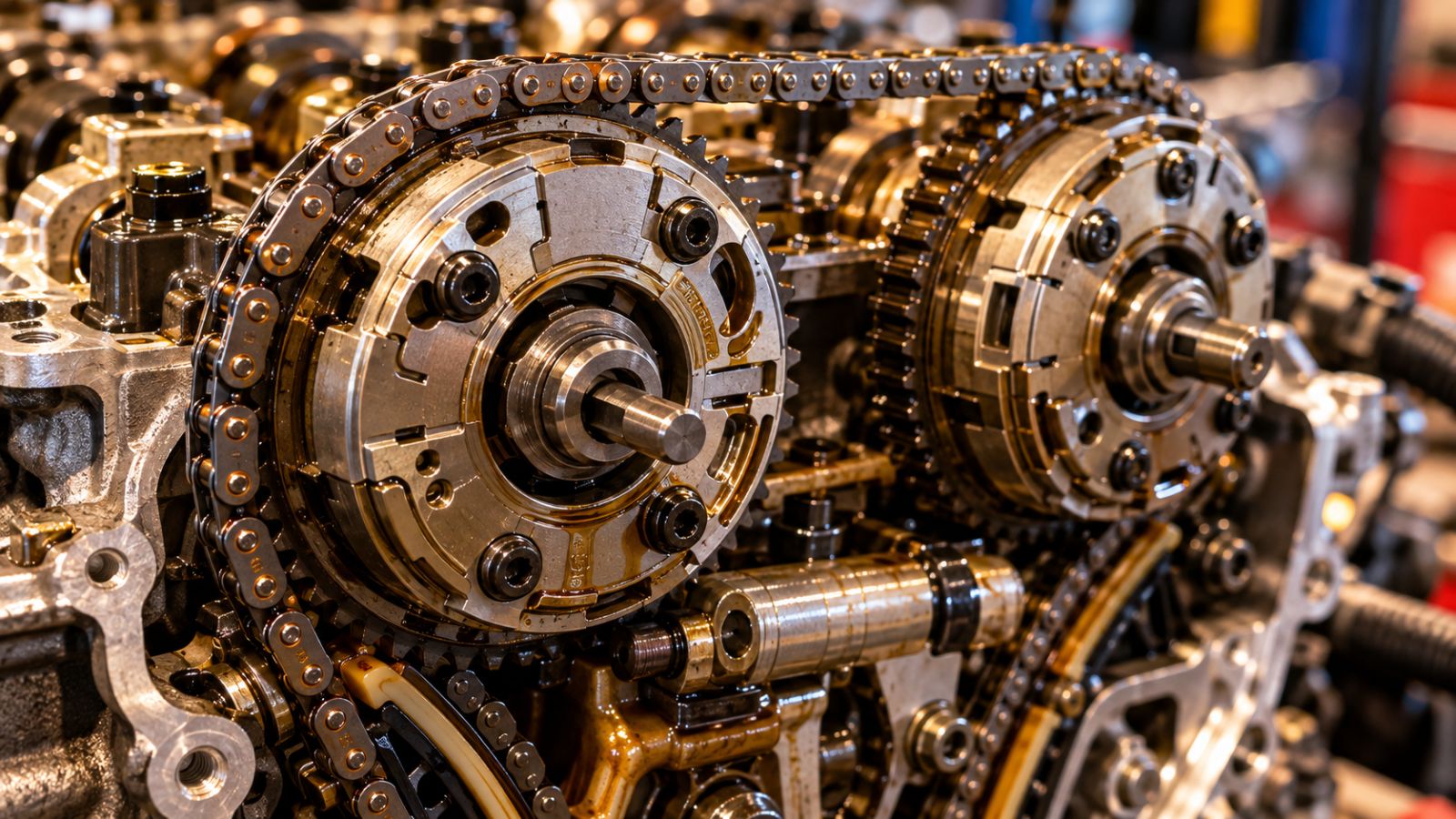
Ford 3.5L and 2.7L EcoBoost engines in F-150s, Expeditions, and Explorers often suffer from premature timing chain stretch and phaser pin failure. Central Florida’s intense heat thins motor oil, causing tensioners to lose pressure during startup and leaving the timing chain to rattle against plastic guides.
Cold-start timing chain slap actively destroys late-model Ford V6 engines across Central Florida. Hot summer days on Highway 441 put massive strain on your engine. Hard acceleration combined with high heat causes hydraulic tensioners to lose pressure during the cool down phase. This loss of oil pressure allows primary chains to whip violently, wearing down guide material, galling phaser vanes, and causing expensive piston-to-valve contact if ignored. Learn more about our Belleview auto repair expertise.
EcoBoost Timing System Stress Metrics
Our system monitors live engine data to spot Ford EcoBoost VCT phaser issues and chain wear early. We identify these specific sounds and patterns so you can avoid a total engine failure caused by internal parts colliding.
| Engine Telemetry | Observed Shop Specification |
| Primary Symptom | 2-5 second cold-start metallic rattle, erratic idle, P0016/P0017 timing correlation fault codes |
| Target Component | VCT Cam Phaser Locking Pins, Primary Timing Chain, Hydraulic Tensioner Ratchet Teeth |
| Specialized Tooling | PicoScope 4425A NVH 4-Channel Oscilloscope, FORScan Pro Diagnostic Software |
| Local/Environmental Stressor | 95°F ambient heat-soaking, stop-and-go idling along Highway 441, 10,000-mile oil change intervals |
| High-Risk Run / Profile | 2017-2020 Ford F-150s, Expeditions, and Explorers exceeding 60,000 miles |
Mechanical Physics Behind VCT Phaser and Timing Chain Failure
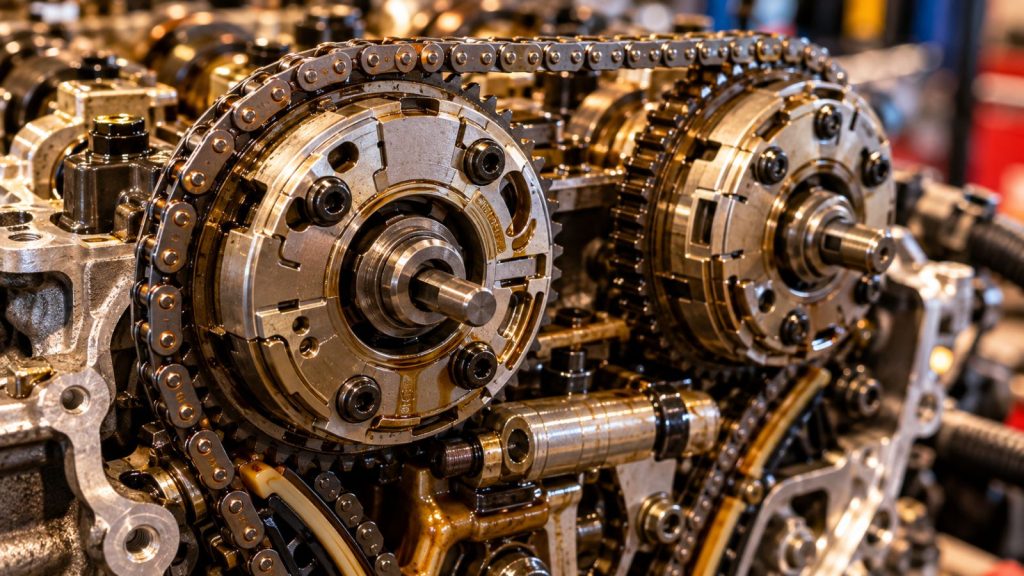
Under baseline conditions, engine oil pressurizes the variable camshaft timing (VCT) phaser chambers through electronically controlled solenoids. Engine control modules adjust camshaft angles relative to the crankshaft while a hardened steel locking pin mechanically secures the phaser at base position during zero-pressure cold starts.
Local driving along Highway 441 subjects EcoBoost powerplants to extreme thermal loading. Sump oil temperatures regularly exceed 230°F during traffic idling, accelerating thermal breakdown of 5W-30 synthetic oil.
As oil thins, hydraulic chain tensioners lose static holding pressure during extended park cycles.
- Primary Chain Whip: The unpressurized primary timing chain whips violently across plastic guide arms upon cold startup.
- Internal Phaser Shearing: Repeated mechanical impacts shear the internal spring-loaded locking pin inside the intake VCT phasers.
- Timing Misalignment: Phaser rotor vanes slap against internal housing walls until oil fills the cavities, stretching chain links and driving cam-to-crank displacement out of factory tolerance.
Field-Tested EcoBoost Phaser Diagnostic Process
Detecting VCT phaser failure and chain elongation before valves bend requires a precise multi-step diagnostic workflow.
- Step 1: Scantool VCT PID Correlation. Connect FORScan Pro or Ford IDS to log VCT_INT_ACT1 versus VCT_INT_DES1 live data parameters. Camshaft position lagging more than 5 degrees behind ECU commands confirms internal phaser vane leakage or solenoid sticking.
- Step 2: PicoScope Waveform Comparison. Probe crank position sensor (CKP) and cam position sensors (CMP) with a 4-channel oscilloscope. Overlay captured waveforms against baseline factory specs to measure exact mechanical degrees of chain stretch.
- Step 3: Cold-Start Pressure Decay Test. Thread an analog oil pressure gauge directly into the main gallery test port. Measure pressure rise time during cold cranking; pressure taking longer than 1.5 seconds to hit 20 PSI points directly to collapsed hydraulic tensioner check valves.
- Step 4: Inspection Port Tensioner Extension Check. Remove the front timing cover inspection plug or passenger valve cover. Measure tensioner plunger extension; a plunger extended past 12mm past housing face confirms the primary timing chain is stretched out of spec.
Shop Note: Never attempt to clear a cold-start rattle by running heavy 20W-50 oil. Thicker oil restricts flow through the micro-screens inside the VCT solenoids, starving the phasers and accelerating top-end valve train wear. Schedule a routine oil change service instead.
Prevent Engine Failure at Our Belleview Repair Shop
Ignoring a cold-start timing rattle on your Ford F-150, Expedition, or Explorer will result in shattered timing guides and bent intake valves. Once loose chain links skip teeth on the crankshaft sprocket, catastrophic interference destroys your engine block. Skip dealership long-term backlogs and trust independent master technicians to fix your timing system correctly.
Book your comprehensive Ford engine diagnostics directly with Gregg Smith Automotive, located at 6202 SE Abshier Blvd, Belleview, FL 34420.
Frequently Asked Questions
Can a cold-start timing rattle ruin my Ford engine?
Yes. Startup rattle indicates a sheared phaser locking pin or collapsed timing chain tensioner. Continued driving allows slack chains to shatter plastic guides, skip sprocket teeth, and cause fatal piston-to-valve interference.
Does replacing oil regularly stop Ford EcoBoost timing chain stretch?
Yes. Fresh synthetic oil maintains the correct shear stability required by hydraulic tensioners and VCT solenoids. Changing oil every 5,000 miles prevents sludge buildup inside micro-screens that starve top-end timing components of vital oil pressure.
Is a check engine light always present with Ford timing chain failure?
No. Mechanical phaser slapping occurs on cold starts long before diagnostic trouble codes trigger. Fault codes like P0016 or P0017 only set once timing misalignment exceeds 5 to 6 degrees of camshaft rotation.
Will replacing VCT solenoids fix a startup rattle on a Ford V6?
No. Solenoids control dynamic oil flow during engine operation, but startup rattle stems from damaged internal phaser locking pins or stretched timing chains. Resolving cold-start noise requires replacing phasers, chains, tensioners, and guides as a complete assembly.
Can extended idling cause premature timing chain wear on Ford trucks?
Yes. Extended idling causes high oil sump temperatures and low oil pump volume output. Low hydraulic pressure combined with severe heat-soaking accelerates chain pin friction and internal phaser housing wear.