

Proper tire alignment is essential for maintaining handling, tire life, and fuel efficiency in your Toyota. In Belleview, FL, heat, heavy rain, and uneven road surfaces can gradually shift alignment angles. Understanding how alignment works and recognizing early warning signs helps prevent premature tire wear and suspension damage.
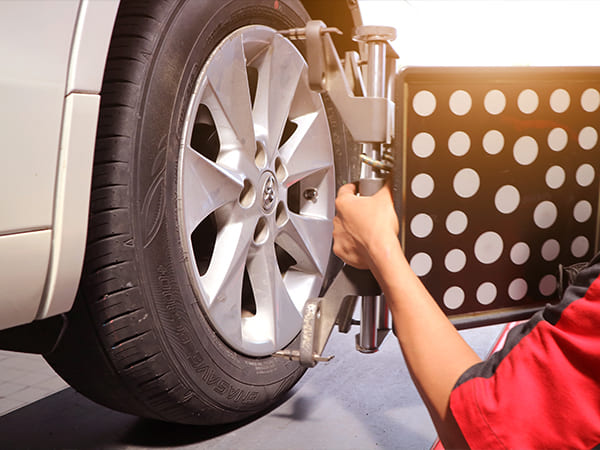
Why Toyota Tire Alignment Is More Than Just Straight Wheels
When drivers think about tire alignment, they often think it simply means “making the car drive straight.” In reality, alignment affects steering precision, braking stability, tire wear, and fuel economy. Toyota vehicles are engineered with tight suspension tolerances. Even small deviations in camber, caster, or toe can cause uneven tire wear or subtle pulling.
In Belleview auto repair work, we frequently see Toyotas that appear to drive normally but show early inside-edge tire wear due to slight misalignment. Left uncorrected, that wear shortens tire life significantly.
How Tire Alignment Actually Works on Your Toyota
Wheel alignment refers to adjusting three primary angles:
- Camber – The inward or outward tilt of the tire when viewed from the front.
- Toe – Whether the tires point slightly inward or outward when viewed from above.
- Caster – The steering axis angle that affects stability and steering return.
Toyota suspension systems are designed to keep all four wheels tracking evenly. When alignment shifts, tires no longer roll smoothly — they scrub against the pavement instead. That scrubbing creates heat, friction, and uneven wear.
Alignment is separate from tire balancing. Balancing corrects weight distribution within the tire and wheel assembly. Alignment corrects how the wheels are positioned relative to the vehicle. Both are important.
What Commonly Throws Off Alignment in Belleview?
Based on our extensive experience performing Toyota tire alignment in Belleview, Florida, several common local environmental and driving factors actively contribute to alignment issues:
1. Potholes and Road Surface Changes
Florida’s heavy rain and intense storm seasons often lead to significant pavement shifts and the creation of unexpected potholes. Even minor but repeated impacts from uneven roads can subtly alter your vehicle’s precise alignment angles over time.
2. Heat and Asphalt Expansion
Belleview’s scorching summer temperatures frequently exceed 90°F. This intense heat causes the road surfaces to soften and expand, which in turn increases the stress and constant pressure placed upon the delicate components of the suspension system.
3. Daily Commuting and Stop-and-Go Traffic
The constant cycle of repeated hard braking and acceleration, especially common during daily stop-and-go commuting, gradually applies stress. This frequent action slowly causes the suspension bushings and crucial tie rod settings to slightly shift out of specification.
4. Worn Suspension Components
Vital parts such as control arm bushings, tie rods, and essential ball joints naturally wear down over extensive use. Once noticeable mechanical play or looseness develops in these components, the required alignment will no longer be able to maintain its correct settings.
In most instances, the vehicle driver does not notice a sudden, dramatic change in handling or steering. Instead, the drift in the vehicle’s alignment is often a subtle and very gradual process.
Symptoms vs. Underlying Causes
Drivers often report:
- Vehicle pulling to one side
- Steering wheel off-center
- Uneven tire wear
- Steering vibration
- Reduced fuel efficiency
However, symptoms alone do not confirm alignment is the only issue.
For example:
- Pulling can also result from tire pressure differences
- Vibration may be balancing-related
- Uneven wear may indicate suspension wear
Proper diagnosis ensures alignment correction addresses the true root cause.
Why Ignoring Alignment Can Cost More Later
Alignment issues may seem minor at first, but the long-term impact adds up.
Consequences of ignoring alignment include:
- Premature tire replacement
- Reduced fuel economy
- Increased suspension wear
- Reduced steering control during emergency maneuvers
Replacing a set of prematurely worn tires costs significantly more than performing preventive alignment service. For Belleview drivers who rely on their Toyota for daily commuting, maintaining alignment protects long-term reliability.
Preventive vs. Reactive Alignment Maintenance
Preventive approach:
- Alignment check annually
- Alignment after suspension repairs
- Alignment after hitting potholes
- Alignment when installing new tires
Reactive approach:
- Waiting until tire wear is obvious
- Ignoring slight steering pull
- Addressing alignment only after tire replacement
In our Belleview auto repair experience, preventive alignment checks significantly reduce repeat tire replacement.
A Common Local Example
A Toyota Camry comes in for routine service. The driver has not noticed pulling, but inspection reveals slight inner-edge tire wear. Alignment measurement shows toe slightly out of specification. Correction prevents further uneven wear and extends tire life. Small adjustments made early prevent larger expenses later.
Protecting Your Toyota’s Handling and Tire Life
Tire alignment is not optional maintenance. It directly affects tire longevity, fuel efficiency, and steering stability. In Belleview’s heat and changing road conditions, alignment drift happens gradually. Catching it early prevents premature tire wear and suspension stress. A proactive alignment check protects your Toyota’s performance and keeps long-term ownership costs under control.
When Professional Evaluation Makes Sense
If your Toyota is pulling, your steering wheel is off-center, or you are installing new tires, a structured alignment inspection can confirm whether your vehicle is within factory specifications.
At Gregg Smith Automotive, we help Belleview drivers evaluate tire alignment and balancing to ensure even tire wear and proper handling without unnecessary repairs.
Frequently Asked Questions
How often should I align my Toyota in Belleview?
At least once a year, or sooner if you notice pulling or uneven wear.
Is tire balancing the same as alignment?
No. Balancing corrects weight distribution. Alignment corrects wheel angles.
Can alignment affect fuel economy?
Yes. Misalignment increases rolling resistance.
Will new tires fix alignment problems?
No. Misalignment will cause new tires to wear unevenly.
Can heavy rain affect alignment?
Indirectly. Water damage and potholes caused by storms can shift alignment.