

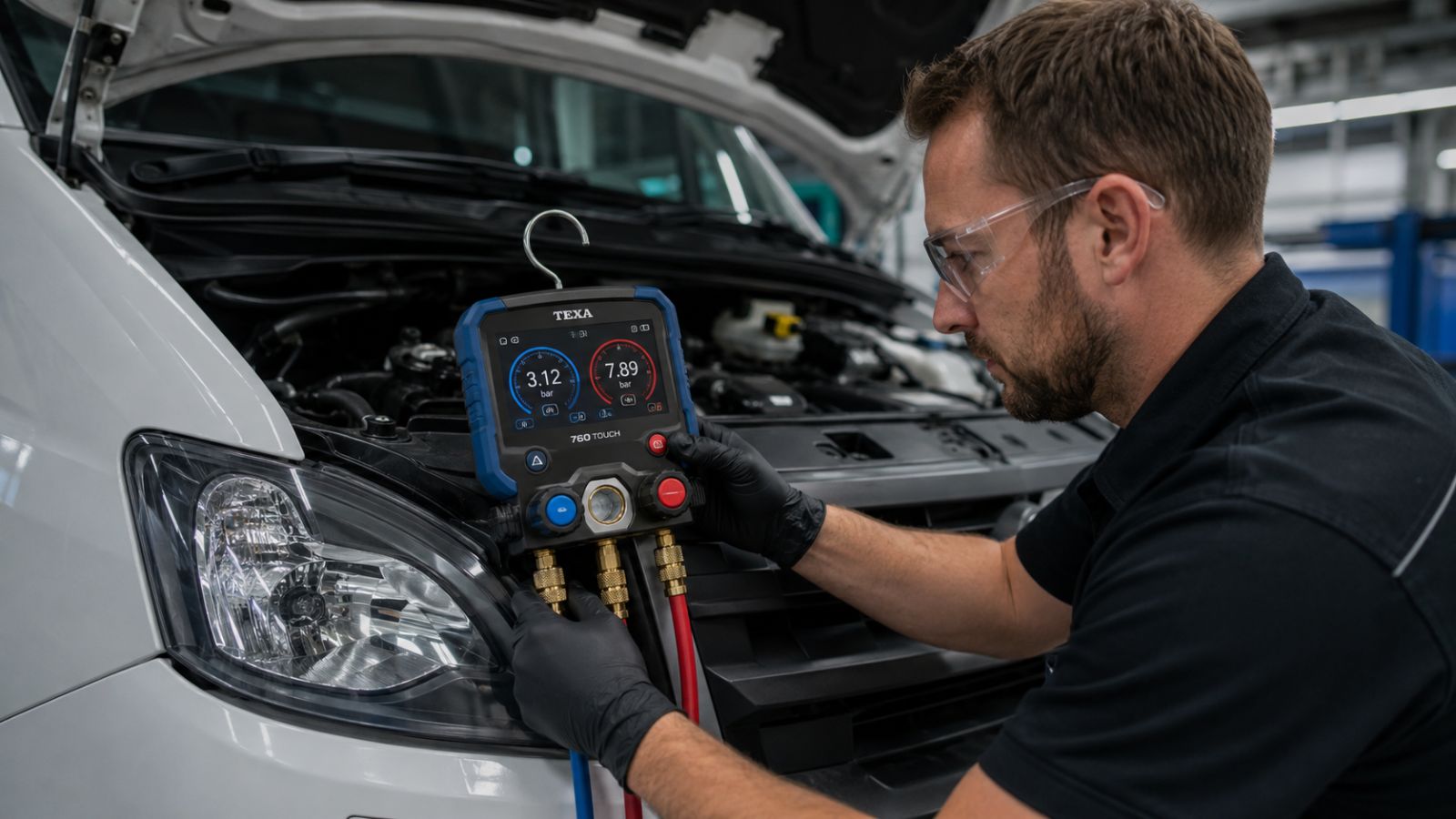
Implementing predictive vehicle AC maintenance reduces driver fatigue and prevents paying expensive emergency service rates during the peak summer rush for local businesses located in Bennah Oaks. Proactive fleet diagnostic strategies protect operational uptime, lower unexpected capital expenditure, and prevent sudden mid-route compressor seizures on busy commercial delivery lanes.
For commercial fleets operating out of the Bennah Oaks hub, proactive AC maintenance is essential for driver safety and asset reliability. At Gregg Smith Automotive, we view air conditioning as a critical mechanical component rather than a luxury; neglecting it leads to costly downtime, missed delivery windows, and unbudgeted emergency repairs.
The Real Cost of Fleet AC Breakdown and the Summer Rush Premium
A reactive “fix-it-when-it-breaks” strategy for commercial fleets is inefficient, especially during Marion County’s June heat. As temperatures rise, emergency component demand spikes statewide.
- Surcharge Exposure: Total breakdowns force dispatchers to pay premium labor rates and urgent delivery fees for parts.
- Backlog Bottleneck: Heatwaves create service backlogs, leaving cargo assets idle and non-revenue-generating for days.
- Route Disruption: Mid-route failures necessitate emergency driver transfers and cargo reloading, doubling labor hours.
The Thermodynamics of Fleet Idling and Why Compressors Fail Early
High-duty cycle delivery vehicles like the Ford Transit, Ram ProMaster, and Chevy Express suffer from accelerated AC system degradation due to extended stationary idling in direct sunlight. During deliveries, the lack of natural airflow means the AC system must rely entirely on electric fans or the fan clutch to pull heat away from the compressor, making the system vulnerable to inefficiency.
When condenser fins are blocked by road grime, heat rejection fails, causing high-side pressures to exceed 300 PSI. This forces the engine to work harder, severely impacting fuel economy and creating extreme thermal strain that risks compressor clutch failure, ultimately driving up fleet maintenance costs.
Financial and Operational Impact of AC Maintenance Philosophy
To properly illustrate the bottom-line budget implications for local business operations, we can directly analyze the cost metrics of a proactive fleet program against a standard reactive breakdown model:
Proactive Fleet Upkeep vs. Emergency Reactive Maintenance
| Operational Metric | Proactive Preventive Program | Emergency Reactive Model |
| Asset Downtime Window | Controlled 60-minute scheduled window during off-peak hours. | Unpredictable 2–4 day route disruption during peak delivery runs. |
| Component Replacement Scope | Targeted replacement of low-cost items like orifice tubes or drier elements. | Catastrophic system replacement including compressor, condenser, and lines. |
| Financial Cost Profile | Flat-rate commercial pricing with predictable quarterly operating costs. | Volatile emergency labor rates combined with premium expediting surcharges. |
| Driver Safety Integrity | Maximized cabin comfort; zero risk of heat-induced cognitive degradation. | Elevated risk of driver physical exhaustion and minor property transit collisions. |
Predictive Verification Metrics for High Mileage Service Vans
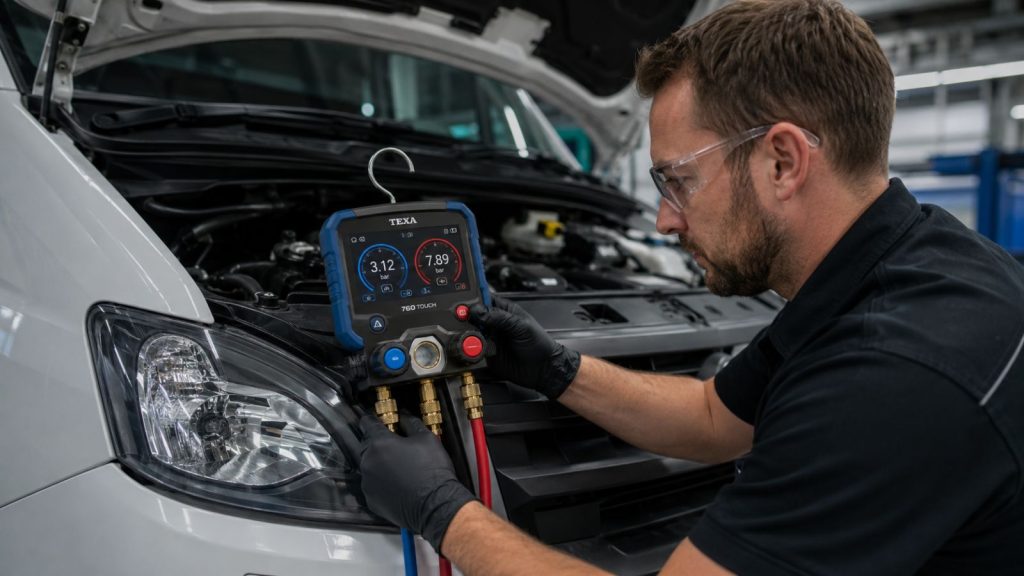
To successfully eliminate unexpected fleet downtime, a fleet manager must establish concrete, predictive baseline testing parameters instead of relying on driver complaints. When we take a commercial fleet van into our service bay, we skip the basic visual inspection and move directly to automated forensic troubleshooting:
- Micro-Leak Analysis: We deploy high-frequency Electronic Refrigerant Sniffers along all flexible rubber line barriers and manifold connections to locate tiny micro-leaks before they cause low system pressures.
- Orifice Tube & TXV Verification: We cross-check the high-side and low-side values on our Digital Manifold Gauge Set under a sustained 2,000 RPM load to verify that the Thermal Expansion Valve (TXV) or internal orifice tube is metering fluid accurately without internal restrictions.
- Condenser Refurbishing: We physically clear the external cooling rows using commercial cleaning agents and deploy specialized Condenser Fin Straightening Tools to guarantee uninhibited heat rejection across the entire surface area.
Driver Fatigue and Hot Cabin Liabilities
Sustained cabin temperatures above 85°F induce rapid physical and cognitive fatigue. As driver reaction time slows and situational awareness drops, the risk of minor backing accidents, mirror clips, and delivery lane collisions in Bennah Oaks spikes sharply. Maintaining an under-cooled workspace drives up driver turnover and increases field friction. Keeping your climate system optimized is an essential risk mitigation strategy for your commercial insurance profile.
The Verdict on Securing Bennah Oaks Fleet Uptime
When a compressor runs low on refrigerant due to an untreated micro-leak, traveling PAG oil loses its suspension and cannot return to the crankcase. The internal components rapidly score, shredding their Teflon seals and turning the system oil into a thick, black sludge called “Black Death.” Once a fleet van reaches this state, a simple compressor swap will not save the vehicle; the residual metallic paste will instantly destroy any new parts installed. Avoid these catastrophic component failures by scheduling controlled, predictive maintenance checkpoints before the peak summer heat locks up your fleet.
Protect Your Commercial Delivery Uptime and Driver Margins
Don’t wait for a major mid-route component failure to disrupt your business logistics and drain your operational cash flow. Our commercial master technicians at Gregg Smith Automotive have the fleet-level diagnostic tools, manifold testing systems, and premium heavy-duty components required to guarantee absolute climate stability for your commercial business vans.
Secure your business assets and lock in your preventive fleet service check today.
- Visit the Commercial Bay: 6202 SE Abshier Blvd, Belleview, FL 34420
- Connect with a Fleet Tech: (352) 245-6738
- Request Your B2B Priority Service: GreggSmithAutomotive.com/Fleet
Frequently Asked Questions
How does a minor refrigerant leak cause a fleet compressor to lock up completely?
Automotive AC systems do not feature an independent oil reservoir; the lubricating PAG oil dissolves directly into the liquid refrigerant and circulates through the system loop. If a slow leak drains your refrigerant volume below design specifications, the oil can no longer migrate back to the compressor crankcase. The internal pistons will quickly run bone-dry, overheat, and permanently seize.
What specific signs should our drivers look out for before an AC system fails completely?
Drivers should immediately report an audible “metallic ticking” or squealing sound when the AC button is pressed, which points to a slipping compressor clutch. Other critical warning indicators include a sudden reduction in vent velocity at idle or a noticeable drop in cooling performance when the vehicle transitions from highway cruising to stationary city traffic.
Why are commercial dual-evaporator systems more prone to unexpected leaks?
Dual-evaporator systems, commonly found in larger passenger cargo vans, feature secondary cooling lines that route all the way to the rear of the cabin. These extended under-vehicle aluminum lines are continually exposed to harsh road debris, vibration, and environmental corrosion along local routes, doubling the potential points for a system leak to develop.
Can we just use over-the-counter refrigerant cans to keep our fleet vans cool during the summer?
No. Off-the-shelf DIY cans do not measure the precise physical weight of the gas within the loop, which must be accurate to within a single ounce for peak commercial efficiency. Overcharging a system with these retail products can cause immediate hydraulic lockup of the compressor or dangerously high head pressures that split older refrigerant lines apart.
How does an off-peak fleet service window help our company save operational revenue?
Scheduling your AC diagnostic checks as part of a pre-planned fleet block during off-peak hours allows you to keep your commercial vehicles on the road during prime business delivery hours. This organized approach avoids unexpected route dropouts and shields your operation from premium emergency roadside labor surcharges.